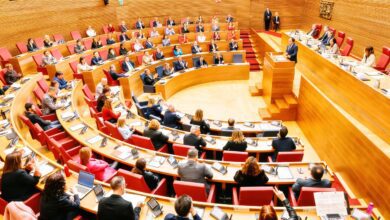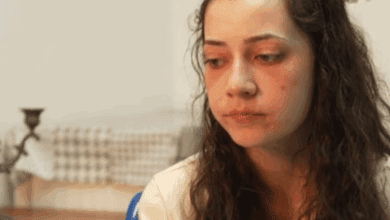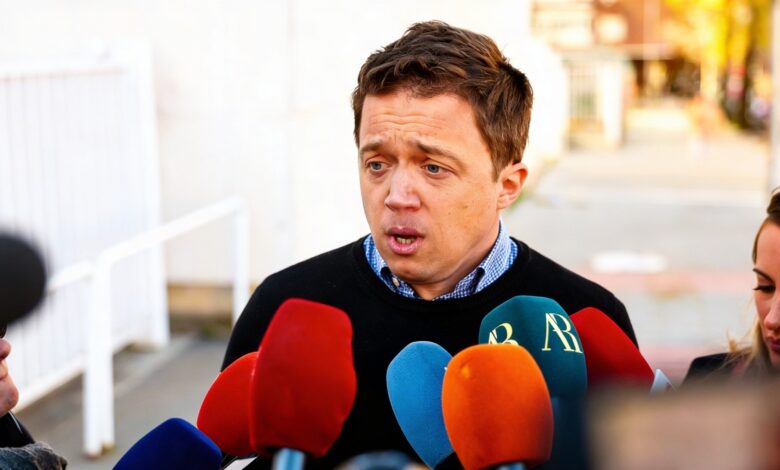
Another court case in Madrid between former politician Íñigo Errejón and actress Elisa Mouliaá has once again attracted public attention. The hearing, at which Errejón was expected to testify against his accuser, was unexpectedly postponed. The delay was due to the absence of Mouliaá and her lawyer, raising questions about the future of the case and how such incidents affect public trust in Spain’s judicial system.
Court cases involving public figures always spark wide public interest. In this instance, the situation concerns not only personal accusations but also the potential reputational consequences for both parties. As reported by El Pais, the actress’s legal team first cited medical reasons, but after the court’s refusal, they referred to an emergency related to the lawyer’s health. As a result, the hearing was rescheduled for late April, adding further uncertainty to an already complex case.
Allegations and counterclaims
The story began when Elisa Mouliaá accused Íñigo Errejón of sexual assault, after which Errejón filed a counterclaim, arguing that the actress was spreading slander and false accusations. According to El Pais, the former Sumar leader believes his opponent not only twisted the facts but also tried to influence witness testimony, which could be classified as an offense against honor.
The focus turned to messages posted by Mouliaá on social media, in which she claimed that Errejón allegedly pressured witnesses to change their statements. However, the couple who rented the apartment where the events took place testified via video link from Australia and refuted the actress’s version. These details became key for the former deputy’s defense.
Role of the witnesses and the prosecutor’s stance
Witnesses involved in the case stated they noticed no signs of violence that night. According to El Pais, their testimonies were backed by documentation and contradicted Mouliaá’s account. Moreover, the prosecutor twice called for the case against Errejón to be dismissed, strengthening his position in court.
In response to the actress’s accusations, Errejón turned to a notary to record Mouliaá’s posts out of concern that they might be deleted. Case materials note that the actress repeatedly accused the politician of ‘extortion’ and ‘manipulation’, but no evidence was presented to support these claims. Errejón’s defense emphasizes that all his contacts with witnesses were transparent and carried no pressure.
Legal nuances and hearing postponement
Judge Arturo Zamarriego, overseeing the case, accepted Errejón’s counterclaim as far back as December. The hearing was initially scheduled for February, but had to be postponed due to the absence of the defense. According to russpain.com, such delays may prolong proceedings and influence public perception of the fairness of the judicial process.
Such cases are not uncommon in Spain: hearings are often postponed for medical or other reasons, raising questions about the efficiency of the courts. In this case, moving the hearing to late April could alter both parties’ strategies and impact the future course of the proceedings.
Context and public reaction
The situation involving Errejón and Mouliaá mirrors other high-profile cases, where public accusations and counterclaims become part of the reputation battle. In recent years, there has been a rise in public figures in Spain turning to court to defend their honor and dignity. For example, a recent fraud case involving the mayor of Benamaurel generated public interest due to unexpected developments—more details are available in the article on the progress of the investigation against the mayor of Benamaurel.
Overall, such proceedings highlight the importance of transparency and impartiality in the Spanish judiciary. Each new case prompts discussion not only about specific allegations but also about the state of the court system as a whole. In the coming months, attention to the Errejón and Mouliaá case is likely to intensify, and its outcome could set a precedent for similar proceedings in the future.