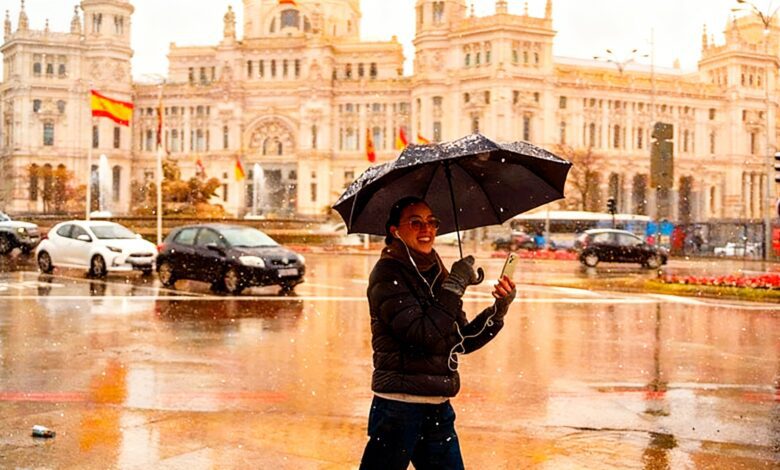
In the coming days, Madrid residents will face a significant change in weather conditions, which may affect daily life and the plans of many city dwellers. After a period of unusually warm and dry weather, rain and a noticeable drop in temperatures are returning to the capital. Meteorologists warn of possible disruptions to public transport and changes to the city’s usual routine.
The change is due to the activation of cyclone Therese, which has already brought heavy rainfall to the Canary Islands. According to RUSSPAIN.COM, some parts of the archipelago saw over 300 millimeters of rain in a short time, leading to local flooding and road difficulties. The weather front is now moving toward the mainland, and Madrid will come under its influence within the next day.
Impact on the capital
Temperatures in Madrid are expected to drop by 8–10 degrees compared to previous days. Such a sharp drop could catch many by surprise, especially after an extended spell of spring warmth. Meteorologists advise city residents to prepare for the changes: review their wardrobe, be vigilant on the roads, and consider potential delays in public transport.
The rain brought by Therese may be intense, particularly at night and in the early hours. City authorities have already warned of possible temporary traffic jams and a rise in accidents. Drivers are advised to take extra caution, and pedestrians should choose appropriate footwear and clothing.
Impact on the region
Weather changes will affect not only Madrid but also other parts of central Spain. Some areas may experience brief downpours and stronger winds. Emergency services have been put on high alert to respond swiftly to any consequences of the adverse weather. In the past, similar weather events have caused power outages and temporary traffic restrictions on certain road sections.
Meteorologists note that such sharp changes in weather are typical during transitional seasons in Spain. However, this year stands out for both the scale of precipitation and the speed at which temperatures are dropping compared to previous years. Residents of the capital and surrounding areas are advised to stay updated with forecasts and follow safety service recommendations.
Context and recent cases
In recent years, Madrid and other major Spanish cities have repeatedly faced sudden weather changes. For example, last spring, a sharp cold snap combined with heavy rain caused transport disruptions and the temporary closure of some schools. Similar situations were observed in other regions of the country, when rains and falling temperatures followed unusually warm spells. These events highlight the importance of timely public information and readiness for rapid climate changes.