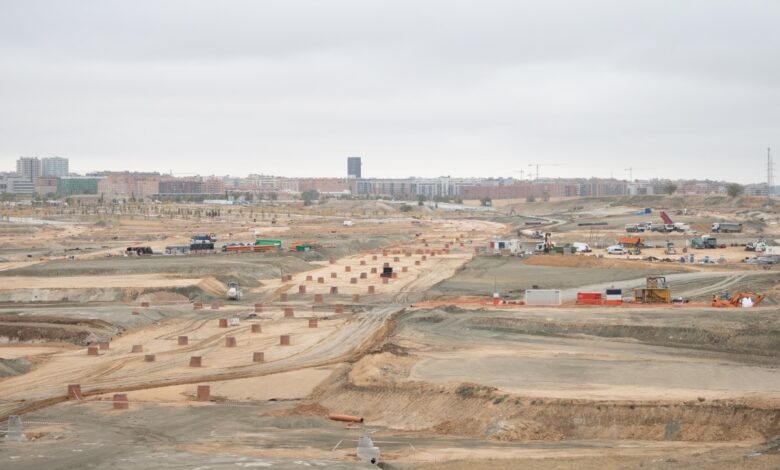
A major project is underway in the southeast of Madrid, already being called the largest in the history of Spain’s real estate market. The Valdecarros district, covering 19 million square meters, is set to become the new home for more than 51,000 families. Plans include both market-rate and affordable housing, extensive green spaces, and modern infrastructure. Expectations are high: if all goes according to plan, initial construction will begin by the end of 2026.
At present, the Valdecarros project is advancing on several fronts. Ninety percent of work for the first phase’s landscaping is complete: streets are paved and trees have been planted, although lighting and utilities are still to be installed. The second and third phases are about 40% finished, with earthworks done and installation of engineering networks underway. Final approval of the land redistribution proposal is expected in the coming months, paving the way for the start of housing construction.
Scale and prospects
Valdecarros is not just a new residential neighborhood but a true city within the city. Its planned development rivals the scale of Pamplona, yet sits within the Madrid metropolitan area. The first three phases alone will see construction of 13,371 apartments, representing one-fifth of the total future homes. Of these, 28,000 will be designated as affordable housing, which is expected to significantly improve real estate accessibility in the region.
Special attention is given to green spaces: more than a third of the area will be dedicated to parks and gardens. For comparison, the green spaces in Valdecarros are twice the size of the famous Casa de Campo and five times larger than El Retiro park. In addition to residential buildings, the project includes plots for social infrastructure such as schools, medical centers, and other public institutions. According to the plans, 62% of the territory is allocated for housing, while 38% is reserved for commercial and public use.
Investment and jobs
The total investment in the development of Valdecarros is estimated at 1.8 billion euros. When including the cost of building construction, the total exceeds 7.5 billion euros. The economic impact for Madrid is expected to be significant: around 450,000 jobs, both direct and indirect, are projected to be created. This should give a substantial boost to the labor market and construction sector in the capital.
Transport accessibility is another major advantage of the new district. Valdecarros will be connected to the main highways—M-45, M-31, and M-50—helping to ease traditionally congested routes into the city. The project includes 127 kilometers of bike lanes as well as new bus and metro lines, all intended to promote environmentally friendly transportation.
Challenges and issues
However, things are not as smooth as one might hope. One of the main challenges remains providing electricity for future homes. At present, only the first 13,371 apartments — those planned in the three initial phases — are guaranteed to be connected. For the remaining 38,000 apartments, the issue of electricity supply is still unresolved: the necessary infrastructure expansion has yet to be approved at the national level.
To address this issue, Valdecarros has joined forces with other major projects in southeast Madrid — Berrocales, Ahijones, and Los Cerros. Together, they are preparing appeals and proposals to the authorities to speed up construction of three new substations, which are intended to provide electricity to all future homes. Land plots for these facilities have already been allocated and will be transferred free of charge, but the final decision rests with the national electricity grid operator.
Commercial and retail market
While improvement works are underway, the management company is preparing large plots for commercial development. In particular, a 142,000-square-meter plot is planned for sale in the La Gavia area and near the A-3 highway, where up to 72,000 square meters of retail space can be built. Project organizers aim to attract a major national or international investor to develop commerce in a comprehensive, rather than piecemeal, manner.
Leading market players are already showing interest in these assets, especially amid the revival of the retail sector. However, the auction dates and the final allocation of plots have not yet been determined. At the same time, representatives of Valdecarros stress that the key to solving the housing crisis lies in increasing supply, not imposing restrictions. Only large-scale construction can balance the market and make housing more affordable for Madrid residents.
Bureaucracy and Delays
One of the main obstacles facing the project is the lengthy approvals and bureaucratic procedures. According to the managers, it took six years just to complete public consultations and obtain the necessary permits. Such prolonged timeframes, they believe, are unacceptable for megaprojects that must respond rapidly to the needs of the city.
Nevertheless, the Valdecarros team remains cautiously optimistic. In the coming months, they hope to secure approval for all required documents and begin construction of the first homes by the end of 2026. If successful, Madrid will gain not only a new neighborhood but also an example of how major projects can be carried out in modern Spain.
In case you didn’t know, Valdecarros is the largest comprehensive urban development project in Spain, located in the capital region. The managing company, Valdecarros S.A., oversees planning, construction, and land sales, while also coordinating with city and national authorities. The project is being carried out in several phases over decades, and its implementation is expected to significantly transform the southeast of Madrid and serve as a model for other urban areas across the country.