The death of Gino Paoli became a significant event for the European music world, including Spain, where Italian pop music has always had a special following. His songs have long been part of the cultural canon, and his influence on Spanish performers and audiences is still felt today. The passing of such a songwriter is not just a personal loss for fans, but also a moment to reflect on the role music plays in shaping the identity of entire generations.
Gino Paoli passed away at the age of 91 at his home in Genoa following a brief hospitalization. The musician’s family has asked for privacy and has not disclosed details about his final days. According to RUSSPAIN, Paoli was born in Monfalcone but lived in Genoa from early childhood, where his artistic journey began.
Songs that remain
Paoli’s contribution to Italian songwriting is hard to overstate. His compositions “Senza fine”, “Il cielo in una stanza”, “Sapore di sale”, “Che cosa c’è”, “La gatta”, and “Una lunga storia d’amore” have become an integral part of Italy’s musical heritage. Many of these songs are also well known in Spain, where they have been performed by local artists and played on radio stations for decades.
Paoli was not only a songwriter but also a man with a complex life story. His youth unfolded amid a bohemian atmosphere and friendships with figures such as Luigi Tenco, Bruno Lauzi, Umberto Bindi, Giorgio Calabrese, and the Reverbere brothers. This group laid the foundation for the so-called ‘Genoese School,’ which influenced the development of singer-songwriter music across Europe. In Milan, Paoli met Giorgio Gaber and Mina—the latter recorded ‘Il cielo in una stanza,’ bringing him his first wave of success.
Personal turmoil and comeback
In the 1960s, Paoli experienced not only creative highs but also personal upheavals. His relationships with Ornella Vanoni and Stefania Sandrelli were discussed in the press, and his attempted suicide in 1963 became one of the most talked-about topics of the time. Despite these crises, Paoli managed to return to the stage, releasing albums in the 1980s that revived his popularity. These included ‘Ha tutte le carte in regola’ and ‘Una lunga storia d’amore,’ as well as ‘Ti lascio una canzone’ and ‘Quattro amici al bar’ in the 1990s.
Over the years, he collaborated with musicians such as Ennio Morricone and Gato Barbieri, and wrote for other artists, including Zucchero. In 1987, Paoli was elected as a deputy from the Italian Communist Party—an unexpected turn in his biography.
Music without borders
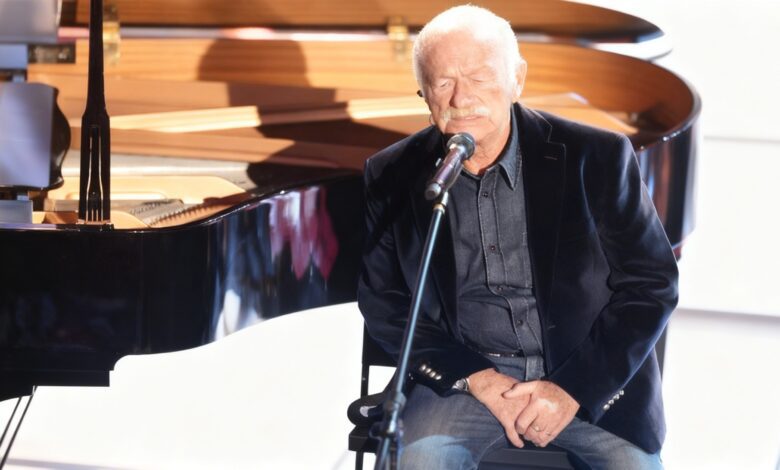
In his later years, Paoli performed with leading Italian jazz musicians, including pianist Daniele Rea. His concerts were sold out, and his performance style remained distinctive and fresh. Despite his fame, Paoli shunned publicity and rarely gave interviews, preferring to communicate with his audience through music.
In Spain, his work was seen as a symbol of an era when music brought people from different countries together. Many Spanish artists acknowledged Paoli’s influence on their own music, and his songs are still performed at concerts and aired on radio today.
In recent years, Europe has lost several iconic figures from the music scene. For example, in 2024, Spain bid farewell to singer Raphael, and in 2025, France lost Charles Aznavour. Each of these events sparks discussions about the role of music in society and how artists’ legacies live on after their passing. These moments serve as a reminder that cultural ties between countries remain strong, and music is a universal language that connects generations.