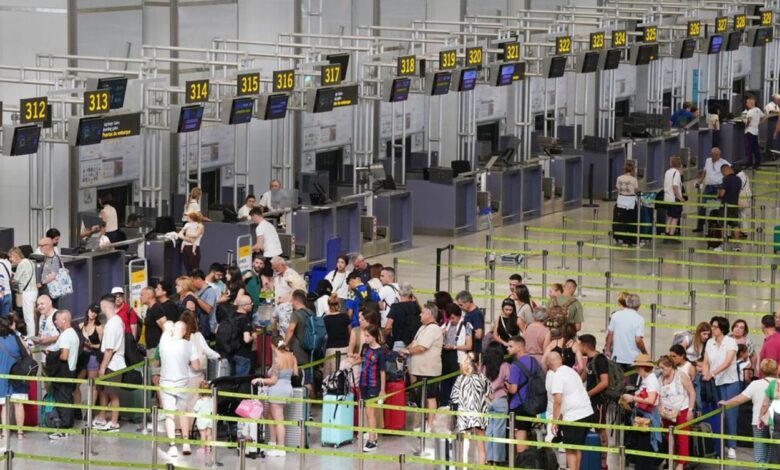
The Málaga Airport (Aeropuerto de Málaga-Costa del Sol) is set for a major transformation in the coming years. By 2028, expansion work will begin, promising to completely change the familiar look of the Costa del Sol’s main air gateway. The project has been allocated 1.5 billion euros—a sum comparable to the budget of an entire city. The goal is not just to increase capacity, but to make the airport one of the most modern and user-friendly in Europe.
Currently, Málaga’s terminals handle around 25 million travelers each year. Once all renovation phases are complete, this figure is expected to rise to 36 million. For comparison: just 15 years ago, only 12 million passengers passed through here. The growth is impressive, and these new plans are certainly ambitious.
What’s changing: new terminals and more comfort
As part of this upgrade, the terminal area will nearly double—from 80,000 to 140,000 square meters. The old Terminal 1 and two piers will be demolished, replaced by a modern complex for flights outside the Schengen zone. The number of boarding bridges will increase from 26 to 48, allowing for faster and easier boarding and disembarking.
Special attention will be given to passenger comfort: new waiting areas will be created, VIP lounges expanded, and more space added for shops and restaurants. During peak hours, when long lines currently form, the situation should noticeably improve. In the summer months, over 92,000 people pass through the airport daily, and new technologies—such as automated baggage drop-off and biometric systems—will help manage the flow.
Infrastructure, ecology, and new routes
A key part of the project is improving transport accessibility. In recent years, the roads leading to the airport have often become congested, especially in summer. Authorities promise to finally implement the northern entrance project, which has been discussed for two decades. There are also plans to expand parking and upgrade the surrounding areas.
In the field of ecology, the airport is focusing on its own solar power plant, which will supply all its energy needs. Only “green” electricity is already in use here, but in the future, all of it will be generated on-site. Additionally, the fleet of service vehicles will be switched to electric power.
International opportunities and new horizons
Once the reconstruction is complete, Malaga will be able to accommodate more long-haul flights. The introduction of new, longer-range aircraft opens up possibilities for direct routes to the Americas, the Middle East, and North Africa. Currently, 80% of passengers fly within Europe, but in the coming years, the range of destinations is set to expand significantly.
This winter, the airport will connect Malaga with 135 destinations across 34 countries. The number of flights and available seats continues to grow, and new technologies will allow even more travelers to be served without compromising service quality. Authorities in Andalusia are even considering creating their own airport management company for the region to boost efficiency and flexibility.
For now, the project is still in the approval and development phase, but the first contracts for technical support have already been signed. In the coming years, Malaga could become not only the main tourist hub of southern Spain, but also one of the most advanced airports in Europe. Anyone who loves to travel and values comfort will find it exciting to watch this transformation unfold.