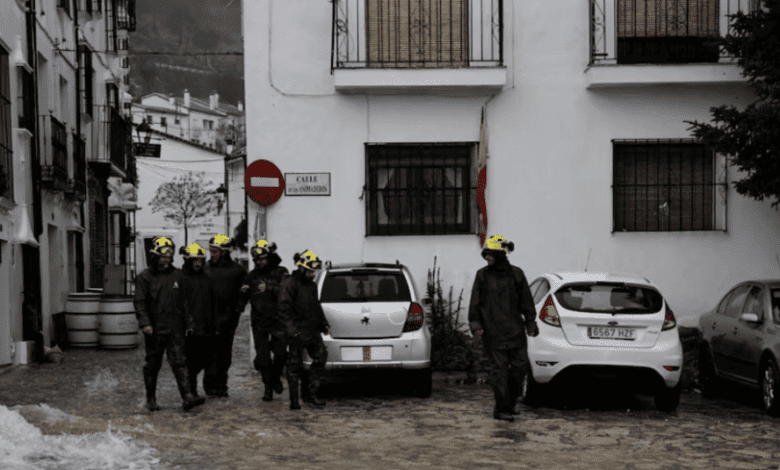
The emergency evacuation in Grazalema was a forced response to unprecedented weather conditions that have already affected thousands of Andalusia residents. The decision to fully evacuate the remaining 1,200 people was made due to the dangerous state of the groundwater and the threat of large-scale flooding. For a region where such events are rare, the current situation has become a real test for local authorities and emergency services.
Authorities explain that the groundwater situation beneath Grazalema is out of control. Water has started seeping to the surface through cracks in streets and squares, creating a risk of sudden sinkholes and flooding. The evacuation is being carried out via the only available road leading to Ronda, where temporary accommodation centers have already been prepared for residents. In the coming hours, all evacuees are expected to be placed in hotels and other safe facilities.
Authorities’ response
The head of the autonomous community, Juan Manuel Moreno, personally visited the affected city to assess the situation and oversee the evacuation process. According to him, the situation is developing according to a rare scenario that requires maximum focus and coordination among all services. Authorities are taking advantage of the brief improvement in the weather to carry out the evacuation as smoothly as possible and without panic, as another weather front is expected by the weekend.
Local officials emphasize that the decision to evacuate was made solely for safety reasons. According to Mayor Carlos García, no one can predict where the next surge of water from the overflowing karst aquifer will occur. Under such circumstances, any delay could lead to tragic consequences.
Scale of the disaster
Grazalema is not the only settlement now in the danger zone. In Andalusia, the number of evacuees has already approached 5,000. In the province of Córdoba, floods from rivers and streams forced the relocation of over 300 residents from the Guadalvalle area and near the Guadajoz River. Temporary shelters have been set up for them, while emergency services continue to monitor the situation and do not rule out further evacuations.
In Ronda (Málaga), military units have joined efforts to deal with the aftermath of the disaster. Due to the overflow of the Guadalevín River and destroyed roads, more than 300 people have been cut off from the outside world. In some municipalities, rainfall reached over 100 liters per square meter in just one day, while in Alpandeire this figure exceeded 200 liters.
Impact on the region
In Arcos de la Frontera, around 800 people have been evacuated, including elderly residents of a nursing home located near the namesake reservoir. For the first time ever, the sluice gates here were opened to their maximum capacity—700 cubic meters of water per second. This was a necessary measure to prevent the dam from collapsing and avert catastrophic consequences for nearby areas.
The situation in the province of Granada remains tense. Over the past 24 hours, river levels have reached historic highs, leading to numerous incidents in the Genil river valley, on the slopes of Sierra Nevada, and in coastal areas. More than 230 people have been forced to leave their homes in the municipalities of Dúdar, Órgiva, Villanueva Mesía, and others.
Event context
The surge in evacuations and road closures in Andalusia was discussed in previous reports. Recent events have shown how quickly daily life can be upended: mass relocations, the suspension of school classes, and blocked transport routes have become a reality for thousands of families. Detailed accounts of how storm Leonardo paralyzed the region and forced people to leave their homes can be found on the pages of RUSSPAIN.COM, where eyewitness testimonies are collected and the impact on infrastructure is analyzed.
Government response
Deputy Prime Minister María Jesús Montero has already announced plans to declare the hardest-hit areas disaster zones. This will help speed up aid distribution and recovery of infrastructure after a series of downpours that continue to batter the region. Preliminary estimates suggest the number of evacuees may rise if weather conditions do not improve in the coming days.
Authorities are coordinating efforts with the military, emergency services, and social services to ensure safety and minimize damage. Special attention is given to vulnerable groups, including the elderly and families with children, for whom separate temporary accommodation centers have been organized.
Similar cases
In recent years, Andalusia has already faced the devastating impact of heavy rains and floods. In 2023, a similar situation occurred in the provinces of Málaga and Sevilla, where river overflows led to the evacuation of hundreds of residents and caused such extensive infrastructure damage that recovery efforts dragged on for months. Then, as now, authorities had to take emergency measures to avert casualties and minimize economic losses in the region. Such events are becoming increasingly common, raising concerns among climate and civil protection experts. Looking back at previous incidents, timely response and coordinated rescue actions have helped prevent tragedies, yet the repercussions for local communities are felt long after the water recedes.