On the banks of the Guadiana River stands Mérida, a city where past and present intertwine at every turn. Here, among ancient stones, Augusta Emerita once arose, and today, life is vibrant: exhibitions, concerts, theatrical performances, and a never-ending stream of tourists eager to touch history.
The city’s signature landmark is the Roman Bridge—the longest in Spain, stretching nearly 800 meters with a maximum height of 12 meters. Its massive stone blocks still bear witness to the skills of ancient builders who crafted structures to last for centuries. Walking across the bridge, you can’t help but feel the breath of that era, when Mérida was a major center of the Roman province.
Close by rise the theater and amphitheater, not just preserved, but still alive. The theater, built around 15 BC, hosts the International Festival of Classical Theatre every year. This season, audiences saw performances inspired by ‘Memoirs of Hadrian,’ ‘Oedipus Rex,’ and ‘Cleopatra in Love.’ The amphitheater, with its oval arena and impressive scale, continues to captivate the imagination, recalling the thousands of spectators who once filled its stands.
Equally impressive is the Acueducto de los Milagros—73 surviving pillars that once supplied water to the northwestern districts of the city. Its elegance and durability draw admiration even from modern engineers. The San Lázaro aqueduct, with its arches and channels of lead and ceramics, reveals the complex water system of ancient Mérida.
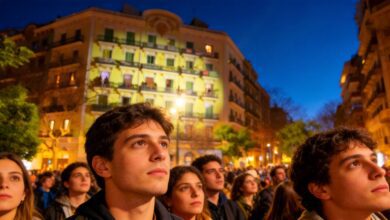
In September, the city once again became a center of cultural life by hosting the eighth edition of the Noche del Patrimonio. More than 70 free events—including music and dance performances, workshops, and nighttime monument tours—attracted thousands of residents and visitors. For the first time, the Roman dam Proserpina was included in the program, offering open-air activities. City museums, including the National Museum of Roman Art, also opened their doors to everyone.
Such a cultural surge did not go unnoticed: during the summer, the number of visitors to sites managed by the city consortium reached 135,207—an increase of 5% compared to the previous year. Today, Mérida is not just a corner of history, but a vibrant open-air museum where antiquity and modernity complement each other. Here, you can not only see ancient ruins, but also become part of the events that make the city unique and unforgettable.