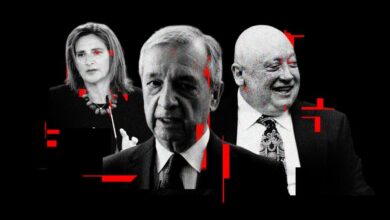
The situation surrounding the recent meeting in Washington has become a topic of discussion for many in Spain. The question of how to respond to threats from the United States directly affects the country’s interests and could alter the balance of power in Europe. Decisions made at the highest level have the potential to impact Spain’s economy, security, and international standing.
During his visit to the White House, German Chancellor Friedrich Merz found himself in the spotlight after he did not publicly defend Spain against sharp statements from US President Donald Trump. The American leader threatened to end trade relations with Spain in response to Madrid’s refusal to allow the use of the Rota and Morón military bases for operations against Iran. Standing next to Trump, Merz did not object and even endorsed his remarks about Spain’s insufficient contribution to NATO, which prompted confusion among European partners.
After the meeting, on his way to Berlin, Merz explained his position to German journalists. According to him, he preferred to discuss the contentious issues with Trump privately to avoid escalating the conflict in public. In a private conversation, the chancellor reminded that Spain is part of the European Union and any trade agreements with the US are only possible with the participation of all EU countries. Merz emphasized that Spain should not face separate pressure, and any agreement reached would affect all union members.
Reaction in Europe
The German leader’s silence sparked a wave of criticism in European media. Süddeutsche Zeitung pointed out that public disputes with Trump rarely yield results and can sometimes lead to even greater complications. Meanwhile, Tagesspiegel described Merz’s behavior as a mistake that could negatively affect relations between Spain and Germany, as well as the unity of the European Union. Deutsche Welle emphasized that the Chancellor’s visit was mainly focused on the situation in the Middle East, but it was the reaction to Trump’s remarks that became the main topic of discussion.
According to El Pais, many experts believe that such incidents could serve as a signal to other EU countries about the need for a more coordinated stance in relations with the United States. With Washington increasing pressure on its European partners, the absence of a united front may weaken Europe’s position on the global stage. Recent events show that similar disagreements have already arisen among EU countries regarding defense and trade issues.
The Spanish Perspective
For Spain, the situation is further complicated by the fact that Merz’s decision not to stand up for Madrid is seen as a signal of possible isolation within the European Union. The country’s authorities emphasize that any negotiations with the US must be conducted collectively in order to avoid pressure on individual states. According to El Pais, the Spanish government intends to seek support from other EU members and prevent similar incidents from recurring in the future.
In this context, it is worth recalling that similar difficulties have previously arisen in other regions of Spain. For instance, in Extremadura, negotiations between political forces reached an impasse, which also impacted the stability of the government—you can read more about this in the article on the political crisis in Extremadura. Situations like these demonstrate how important it is for Spain to maintain unity and secure support at the European level.
Implications for the EU
In the near future, the issue of European Union unity and its ability to withstand external pressure is expected to return to the spotlight. Analysts note that the lack of a clear and coordinated position could bring new challenges for European countries. As the US continues to call for higher military spending and a revision of trade agreements, each EU member state is forced to strike a balance between national interests and collective security.
In recent years, Europe has already faced similar challenges. For example, in 2024, there was discussion about Germany’s role in negotiations with the US on security issues, as well as the need to reform decision-making mechanisms within the EU. Then, as now, many experts emphasized the importance of unity and solidarity among member states. Such episodes serve as reminders that any divisions within the union can be exploited by external players to strengthen their own influence.