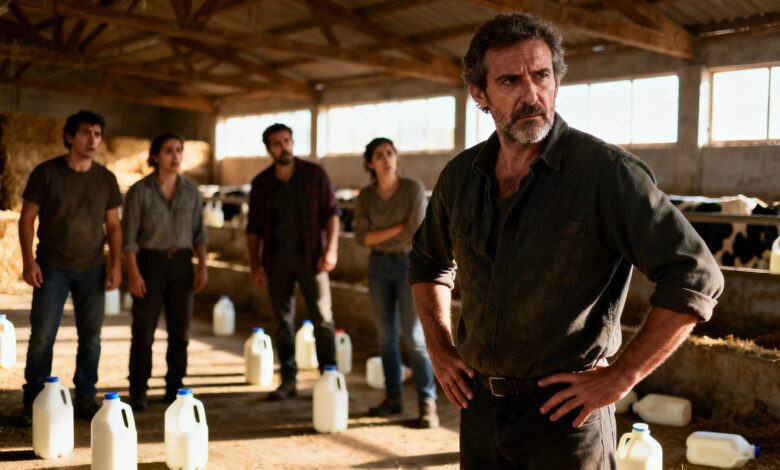
The Spanish dairy market has come under double pressure: a sharp increase in cheap raw milk imports from France and Portugal has coincided with rising costs due to the conflict in Iran. For Spanish farmers, this means not only falling incomes but also the threat of farm closures. In recent months, the situation has worsened to the point that industry organizations are calling it a ‘perfect storm’ for the sector.
Milk imports from neighboring countries have reached record levels not seen since 2012. According to RUSSPAIN, over the past year Spain imported more than a million tons of dairy products, worsening the trade balance deficit. At the same time, domestic production continues to decline: cow’s milk volumes decreased by 0.5% compared to the previous year, and the production of sheep and goat milk is also falling.
Pressure on farmers
Organizations Asaja, COAG, and Sindicato Labrego Galego have expressed dissatisfaction with the new contract terms being offered by processors. These proposals include reductions in premiums of 5–10 cents per liter, making it unprofitable for many farms to operate. Industry representatives note that these measures force farmers to sell milk below production cost, which is against current legislation.
The situation is further complicated by rising energy, fuel, and fertilizer costs. The war in Iran has triggered a surge in prices for diesel, electricity, and agrochemicals. Many farmers report that fuel prices have doubled in the past month, making milk production costs unsustainable.
Imports and competition
The Fenil federation confirms: the trend of falling prices that began in Europe in the second half of last year is now being felt in Spain. Surplus milk from France and Portugal is entering the Spanish market at prices lower than local products, intensifying competition and preventing stabilization. As a result, Spanish producers are losing ground, and many farms are being forced to close.
According to russpain.com, almost half of the country’s dairy farms have disappeared in the past ten years, while the number of processors has only decreased by 12%. This leads to even greater dependence on imports and reduces food security.
Industry response
Industry association leaders are calling on authorities to implement urgent measures. Their proposals include reducing VAT on all dairy products and developing a special support plan in collaboration with intersectoral organizations. They believe only comprehensive solutions can preserve jobs and prevent further production declines.
At the same time, industry representatives believe that while the government’s recent measures are steps in the right direction, they are not enough to stabilize the market. They stress that without state support and a revision of tax policy, the situation could spiral out of control.
Background and recent developments
In recent years, the Spanish dairy sector has repeatedly faced crises linked to fluctuations in raw material prices and growing competition from European producers. In 2023, a similar situation arose after milk production quotas were lifted in the EU, resulting in a surge of cheap imports. At the time, farmers also called for government intervention and protective measures. Despite temporary improvements, the sector’s structural issues remain unresolved, and reliance on external suppliers continues to grow.