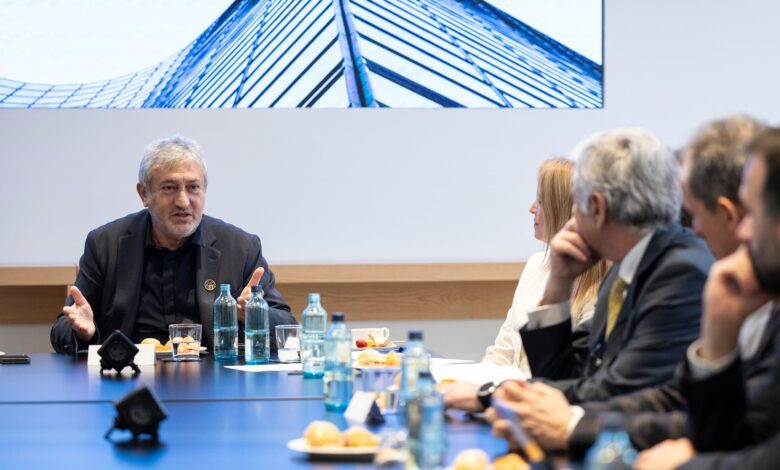
In Spain, concerns are rising over the fact that scientific achievements often go unrecognized by most of the population. This has a direct impact on trust in science and lowers interest in new discoveries. According to El Pais, the discussion around this issue reached a new level after astrophysicist Garik Israelian’s speech at the World in Progress meeting in Barcelona.
Israelian, known for his research and work across various European countries, emphasized that when the state and private foundations spend vast sums on advancing science but do not invest in explaining it to society, the outcome is questionable. He reminded that today’s children and teenagers face an information stream where it’s hard to tell truth from fiction. That’s why, in his view, it is important not only to generate new knowledge, but also to know how to communicate it to a broad audience.
Communication challenges
In recent years, social networks have become the main source of information for millions of Spaniards. However, this has also increased the threat of disinformation and distortion of scientific facts. Israelian noted that even people with higher education often share unreliable videos and messages. He believes that scientific centers and specialized media should produce high-quality, engaging content to counter fakes and misconceptions.
The meeting was attended by representatives of the authorities of Barcelona, Catalonia, and Armenia, as well as heads of major media and scientific institutions. The discussion focused on how, without professional communication, even the most significant discoveries can go unnoticed. According to experts, it is essential to invest in training specialists who can explain complex topics in simple terms.
Inspiration and new approaches
Garik Israelian spoke about his journey from aspiring to be a musician to building a career as an astrophysicist. He emphasized that curiosity and the desire to understand the world are the main motivators for future scientists. Israelian believes that fostering children’s interest in questions about the Universe from an early age will lead to the emergence of new talent in science.
He paid special attention to the role of modern technology. According to him, the development of artificial intelligence gives young people and students access to knowledge, allowing each individual to receive personalized learning. He also noted that advances in astronomy largely depend on technical capabilities — for example, the unique observing conditions in the Islas Canarias have made the region one of the world’s astrophysics hubs.
Private companies and new heroes
In recent years, private companies such as the American SpaceX have fueled growing interest in space both in Spain and around the world. Charismatic figures like Elon Musk serve as role models for young people, inspiring them to tackle complex subjects. However, Israelian believes that popularizing science should not depend solely on individuals or private companies — it is a task for society and the state as a whole.
He also pointed out the risks that arise when politicians without expertise make statements on scientific issues. In his view, this can lead to poor decisions and loss of trust in experts. That’s why it is essential for science communication to be systematic and professional, not random or superficial.
Context and recent developments
In recent years, there has been growing debate in Spain and Europe about how to bring science closer to the public. In 2025, Madrid hosted a science communication forum where experts proposed creating special educational programs for journalists and scientists. Catalonia has seen an increase in projects aimed at popularizing astronomy among schoolchildren. Meanwhile, according to RUSSPAIN.COM, initiatives to combat fake news online are on the rise. These steps demonstrate that public interest in science can be rekindled when it is explained simply and clearly.