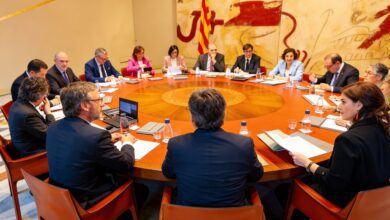
A political storm has erupted in Madrid: what was meant to be a unifying anniversary of the monarchy turned into a widespread boycott. Major political forces in the country, including Vox, refused to take part in the official event at the Congress of Deputies dedicated to the 50th anniversary of the restoration of the monarchy. Each party had its own reasons, but the result was the conspicuous absence of most members of parliament.
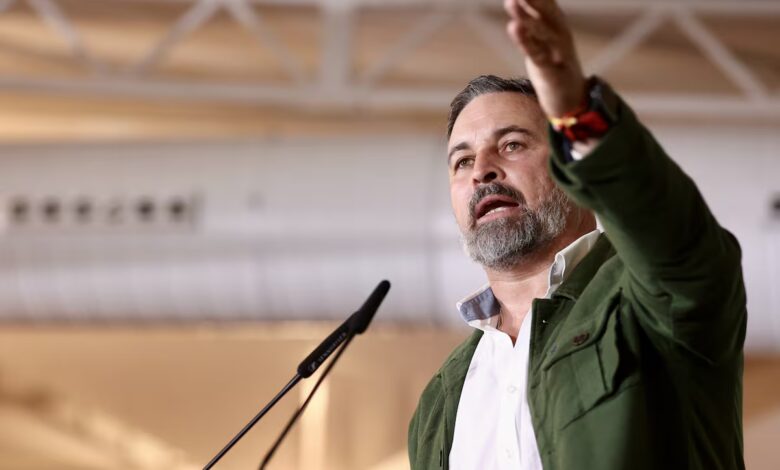
Vox, the last of the major parties, announced it would not attend the celebration. Party representatives explained that they do not wish to be seen alongside the current government, which they view as corrupt, nor do they want to create the illusion of normal relations between the institutions. This move continues their previous stance: they have already avoided official receptions with the Royal Family, choosing to stay away from formal ceremonies.
Different views — a common protest
However, Vox was not alone in its decision to skip the anniversary. A week earlier, parties such as Sumar, Compromís, Izquierda Unida, Podemos, Junts, Esquerra Republicana, EH Bildu, and PNV had already declared they would not participate. Left-wing and nationalist parties cited different motives: they believe that half a century after Franco’s death, the monarchy has yet to distance itself from the country’s authoritarian past. In their view, the Royal Household has not condemned the dictatorship or provided society with full information about key events of the transition period, including the attempted coup on February 23, 1981.
Lawmakers from these parties believe that the anniversary celebration is an attempt to create a one-sided, government-friendly interpretation of Spain’s recent history. They argue that democratic changes were won through the efforts of millions of citizens, not handed down from above. They are also angered by the fact that former king Juan Carlos I continues to publicly express sympathy for the dictator, which they consider unacceptable in modern Spain.
Who Supported the Monarchy
In the end, only representatives of the two largest parties—Partido Popular (PP) and Partido Socialista Obrero Español (PSOE)—agreed to support the Royal Family on this day. Together with King Felipe VI, Queen Letizia, Princess of Asturias Leonor, and Infanta Sofía, they will take part in the event held in the Constitution Hall of Congress. There, a discussion on the role of the monarchy in the transition to democracy will take place, featuring renowned journalists, the ‘fathers’ of the Constitution, and prominent scholars.
The anniversary coincided with the publication in France of Juan Carlos I’s memoirs, adding further resonance to the event. However, instead of unity, society once again found itself divided: some see the monarchy as a guarantor of stability, while others view it as a relic of the past that prevents Spain from finally breaking with its dictatorial legacy.
Political Crisis and Symbols
The widespread refusal to participate in the anniversary became a vivid manifestation of the deep crisis of trust between government institutions and political forces. For the Royal Family, this event was not only an occasion for reflection, but also a reminder that its role in modern Spain remains a subject of heated debate. While some politicians openly turn away from the monarchy, others continue to regard it as a symbol of continuity and stability. One thing is clear: the 50th anniversary of the monarchy was marked by division rather than unity.