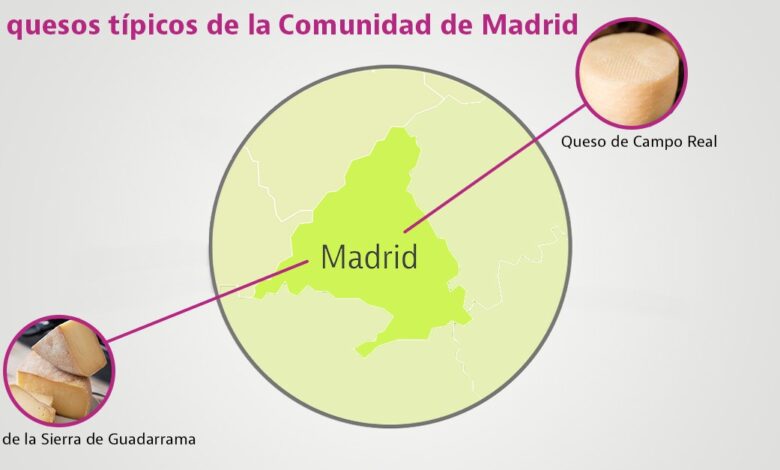
When it comes to Madrid’s cuisine, most people think of cocido, calamari sandwiches, or a variety of tapas in local bars. However, in recent years, cheeses from the Community of Madrid have earned an honorable place on Spain’s gastronomic map, even though their traditions aren’t as deep-rooted as in other regions. Surprisingly, just a short distance from the bustling capital, you can find real delicacies that will impress even the most discerning gourmets. Let’s get acquainted with the most renowned of them.
Campo Real Cheese
Perhaps the most famous of Madrid’s cheeses is the product from Campo Real. Named after its home municipality, it is now made in several towns across Madrid’s plains. This area, with its open landscapes and continental climate, directly affects livestock diets. The cheese is produced using milk from various sheep breeds, including manchega, assaf, negra colmenareña, and rubia del molar.
The production process involves enzymatic coagulation, pressing, and washing. A key stage is the lengthy aging process, which lasts at least nine months. This maturation gives the cheese its dense texture and deep, rich flavor. Its cylindrical shape, weighing around three kilograms, with a firm, buttery rind, is reminiscent of the famous Manchego cheese. The history of this product dates back to the 1950s, with the founding of the Castellana de Ganaderos cooperative by a small group of farmers—a group that now unites hundreds of livestock breeders from the region.
Cheese from Sierra de Guadarrama
This Madrid cheese is born in unique conditions: high mountain meadows, fresh pastures, clean air, and a cooler, more humid climate compared to the rest of the region. These conditions are ideal for raising goats and sheep that graze on natural grasses. Goat cheeses from this area typically feature a white, dense yet creamy texture, with clean milky aromas and a characteristic tang.
Sheep cheeses, in turn, are more robust and full-bodied, with hints of mountain herbs and a dense structure. Among the standouts in Sierra de Guadarrama is the artisan creamery Santo Mamés, which oversees the entire production cycle. In addition, notable producers include La Laguna de Oveja, Embrujo de la Sierra, Peña Gorda, and La Najarra.
Other cheese regions
If you’re wondering which cheese is the best in Madrid, the answer goes beyond just Campo Real and Sierra de Guadarrama. There are also other, smaller, often family-run producers crafting true masterpieces that delight gourmets. In the Las Vegas region, located in the southeast of the area, the fertile lands along the Tajo, Jarama, and Tajuña rivers provide excellent feed for livestock. Here, you can find cheese dairies like Queso Ciriaco and La Rosa, producing a variety of cheeses in the towns of Colmenar de Oreja and Chinchón.
In the northeast of the community lies the comarca of Torrelaguna, which has preserved its rural and livestock traditions. Goat cheese production dominates here. Noteworthy are the dairies La Pastora and Jaramera, whose products have won numerous awards in recent years. Meanwhile, in the Sierra Oeste, in the west, the combination of mountain landscapes and valleys with oak groves, where livestock graze in semi-free range, results in milk with a wide range of flavors. For example, in the municipality of Fresnedillas de la Oliva, they produce a delicate goat cheese that won a World Cheese Award in 2016.
For example, Spanish cheeses regularly win awards at prestigious international competitions such as the World Cheese Awards. This highlights the high quality and diversity of the country’s cheese-making tradition. Not only large, well-known producers receive recognition, but also small artisanal cheesemakers, which speaks to deep-rooted traditions and a constant drive for excellence in this field. So, when traveling through Spain, it’s worth paying attention not just to wine and jamón, but also to local cheeses, which can become a true culinary discovery.