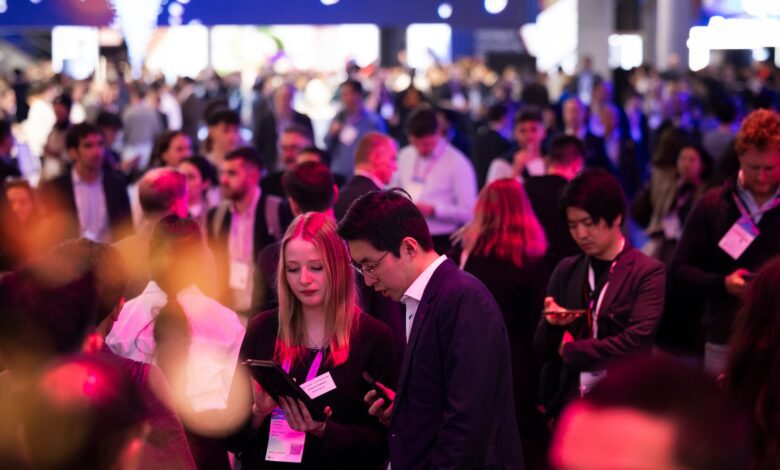
This year, the Mobile World Congress (MWC) in Barcelona became a real test for Spain’s entire tech sector. The war in Iran and the resulting flight disruptions had a direct impact on guest numbers and event organization. For Spaniards, this event is important not just as the largest technology exhibition, but also as a barometer of the country’s resilience to external crises and its ability to respond swiftly to global challenges.
MWC organizers reported 105,000 registered participants, 4,000 fewer than last year. The decrease was caused by mass flight cancellations through Middle Eastern hubs. Many delegates from Asia and the Gulf countries were unable to arrive on time or now have to seek alternative routes to return home. According to El Pais, despite these challenges, organizers consider the event a success and highlight the high quality of discussions and deals made.
Flight disruption issues
The situation with flights became one of the week’s hottest topics. According to airport operator Aena, starting Saturday when the conflict began, only eight of the 22 scheduled flights between Barcelona and Gulf countries operated as planned. The following days saw things worsen: on Sunday, just three of 27 flights departed, and on Monday not a single one of the 20 scheduled planes took off. This led to a noticeable drop in visitors on the first day of the congress, when activity is typically at its peak.
Cancellations continued throughout the week: on Tuesday, only two out of 21 flights operated; on Wednesday, just two out of 19; and on Thursday, ten out of 20 were canceled. Many participants had to change their travel plans, extend their stay, or find alternative ways to get home. The organizers have not disclosed the exact number of affected people but note that they stayed in contact with airlines and tried to ease the situation for guests.
Achievements and New Trends
Despite the challenges, MWC has maintained its status as Europe’s premier technology platform. This year, representatives from 207 countries and territories gathered in Barcelona, with the number of exhibitors reaching 2,900 companies. More than 1,700 speakers and thought leaders discussed key industry topics: the development of artificial intelligence, robotics, cybersecurity, and the ethics of digital technologies. Particular attention was paid to privacy and data protection, issues that are especially relevant for the European market.
Organizers note that 58% of guests are no longer directly connected to the mobile industry and represent a wide range of technology sectors. Among the participants, 17% are C-suite executives and 45% are middle and senior managers. Women made up 27% of all attendees, indicating a continuing gender imbalance in the tech sector.
Looking Ahead
MWC 2026 was the last event held at the current venue: by 2027, the new Hall 0 pavilion is set to open at Gran Via in L’Hospitalet de Llobregat. This expansion will accommodate more visitors and offer greater opportunities for exhibitors and guests. The exhibition also featured the 4YFN forum for startups, where over 1,000 young companies showcased their innovations, while the Talent Arena gathered more than 25,000 participants.
This year, discussions covered not only technology innovations but also security issues. According to El Pais, many delegates shared stories about flight difficulties and finding new travel routes. Some compared the situation to recent incidents at airports, where unexpected events forced passengers to change their plans. For instance, there was a recent emergency landing in Barcelona due to smoke on board— details about this incident can be found here.
In recent years, MWC has repeatedly faced challenges: the COVID-19 pandemic, travel restrictions, and now military conflicts. Despite these obstacles, the event remains a key fixture for the global tech industry and generates a significant economic impact for Barcelona and all of Spain. In 2025, the program is expected to expand further, introducing new formats for participants. Events like MWC are increasingly becoming not just venues for presentations but also platforms to discuss global challenges and shape new trends for the entire sector.