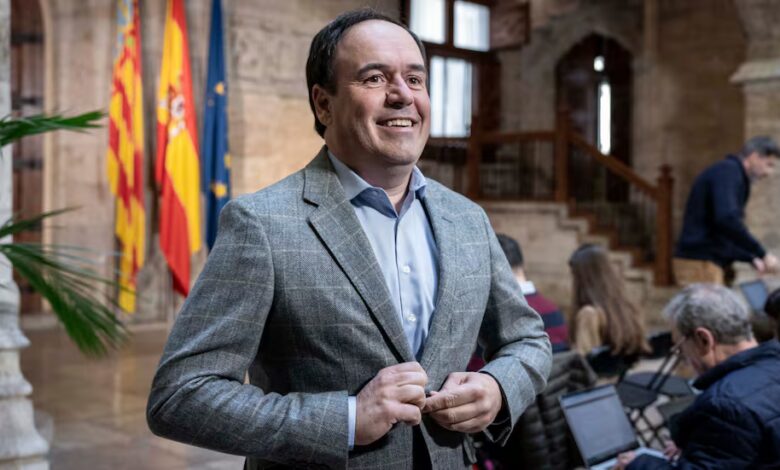
On Wednesday, the new government of the Valencian Community was introduced. Juanfran Pérez Llorca, who recently took office as President of the Generalitat, announced significant changes to the structure and distribution of powers. Most ministers retained their positions, but two new key areas emerged—separate ministries for Presidential Affairs, and for Family, Childhood, and Social Support. The changes also affected the division of responsibilities among the vice presidents, as well as a number of other important sectors.
Almost all members of Carlos Mazón’s previous team remain in the new lineup, except for chief financial officer Ruth Merino. At the same time, the structure of the presidency has been overhauled and responsibilities redistributed among both new and familiar figures. Particular attention has been given to areas that previously drew the most controversy and criticism, especially after the tragic events related to last October’s flooding.
Staff changes
Two ministers who had faced the harshest criticism from the families of the flood victims have kept their posts but lost control over disaster recovery efforts. Susana Camarero will remain vice president but will no longer serve as the official government spokesperson. Over the past year, she faced intense pressure while defending the previous administration’s crisis management decisions. Her place as spokesperson will now be taken by Miguel Barrachina, a seasoned politician who previously led the Popular Party’s parliamentary group and headed the Ministry of Agriculture.
Camarero has also transferred her responsibilities for social support policies, including care for the elderly and dependent citizens. She will remain in charge of housing and equality, and will also take on new areas such as employment and youth policy. At the same time, she has been summoned to court as a witness in the case concerning the deaths of 37 dependent individuals who were using the teleassistance system during the flood.
New ministries and appointments
Two new ministries have been established in the government structure. The first is the Ministry of the Presidency, now headed by Pepe Díez, who has been appointed Vice President. Previously, he served as Director General for Strategic Projects and worked as a legal advisor in the regional administration. The second new ministry is for Family, Childhood, and Social Support, to be headed by Elena Albalat, who previously served as Secretary for Social and Medical Welfare Affairs.
Three people have been appointed vice presidents: Pepe Díez, Susana Camarero, and Vicente Martínez Mus. The latter, who has received high marks for his work, will continue to oversee recovery, environmental issues, territorial development, and now also energy.
Changes in key sectors
Other ministers responsible for crucial areas remain in the government. Marciano Gómez will continue to lead healthcare, Juan Carlos Valderrama will oversee emergency situations and internal security, and Marian Cano will be in charge of industry, tourism, innovation, and trade. Nuria Martínez will remain Minister of Justice but will now also be responsible for transparency, while public administration issues have been transferred to another department. Miguel Barrachina has also retained his previous powers.
A key element of the new structure is the appointment of a Flood Recovery Commissioner. Raúl Mérida, who previously served as Secretary for Environmental Affairs, has taken on this role. He will work under Vice President Musa to ensure effective coordination among municipalities, affected sectors, and central authorities.
Priorities and New Objectives
President Pérez Llorca emphasized that housing, youth, and employment will take center stage over the coming years. He noted that these areas will cut across all government initiatives. For this reason, Vice President Camarero has been given expanded authority in these sectors.
Language policy matters, previously within the Ministry of Education, are now consolidated under the presidency. Llorca announced plans to step up support and promotion of the Valencian language, despite disagreements with coalition partner Vox, which opposes the activities of the Acadèmia Valenciana de la Llengua. The president intends to introduce changes to the Academy’s operations while maintaining its core functions.
Additional Appointments
Three new secretaries will soon join the government: Henar Molinero will become Secretary of the Presidency, Jacobo Navarro will serve as Secretary for Strategic Analysis and Public Policy, and Vicente Ordaz will take on the role of Secretary for Communications. The latter will step down as chairman of the board of the regional broadcaster À Punt.