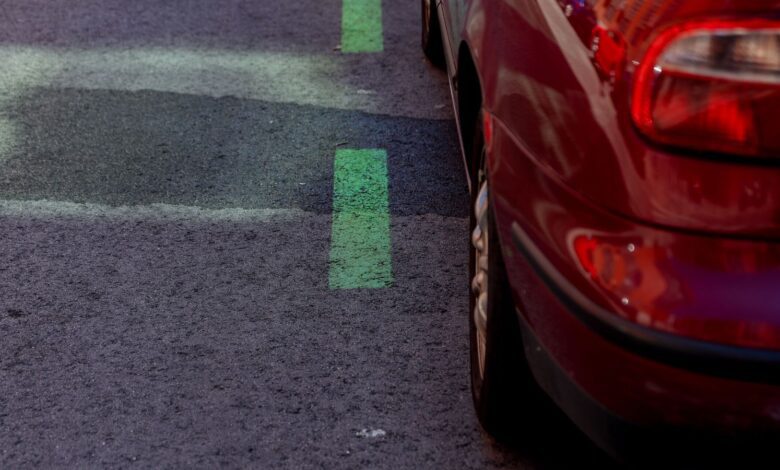
The decision by the Ourense municipality to completely abolish paid parking has become one of the most talked-about events in Galicia. Starting January 1, 2026, city residents no longer pay for street parking, and the familiar parking meters have started to disappear from sidewalks. This move has not only changed the daily lives of locals, but also sparked a heated reaction in other cities of the region, where the issue of paid parking spaces has long been a source of controversy.
The end of an era for parking meters
Ourense mayor Gonzalo Pérez Jácome announced the ‘death’ of the ORA system (Ordenanza Reguladora del Servicio), which had operated in the city for nearly four decades. Democracia Ourensana, the party in power, decided not to renew the contract with Doal, a company linked to high-profile legal investigations. Instead, part of the former parking areas will be allocated for loading and unloading, while the rest will remain free for residents and visitors.
However, the first days after the abolition of ORA led to traffic chaos. The city center was jammed with cars, drivers spent hours searching for a free spot, and the opposition accused city hall of creating a ‘jungle law’ on the roads. Unlimited free parking meant that many motorists left their cars for the entire day, causing dissatisfaction among those who do not have their own garage.
Political battles and financial risks
The decision to abolish paid parking sparked a heated political battle. Opposition parties — PP, PSOE, and BNG — united against the mayor, accusing him of populism and failing to offer real solutions to transportation problems. Particular attention was drawn to the fate of nine employees who worked in the ORA system: their dismissal became a separate point of contention, and now the company Doal is demanding one million euros in compensation from the city.
Furthermore, the Spanish Ministry of Finance has included Ourense on the list of municipalities whose government payments have been suspended due to lack of budget transparency. It is the only provincial capital in Galicia to find itself in such a situation. City authorities explain that abandoning ORA was unavoidable: half of the parking spaces are already located in pedestrian zones, and income from parking meters did not cover maintenance costs.
Galicia: different approaches
The situation in Ourense has prompted comparisons with other cities in the region. In Lugo, paid parking was abolished ten years ago following a corruption scandal involving the Vendex group, which managed the system. After the high-profile ‘Pokemon’ case, in which dozens of officials and businesspeople were implicated, Lugo focused on expanding pedestrian areas and offering free parking on the outskirts.
At the same time, cities like Vigo, A Coruña, and Santiago de Compostela continue to charge for parking, although with varying rates and conditions for residents. In A Coruña, there is a special ‘green zone’ for locals, and in Santiago, a commercial rotation system. Ferrol and Pontevedra have taken a different approach: in Ferrol, the paid parking project was never implemented, while Pontevedra has gained fame as a ‘human city’ model with a fully pedestrianized center and free short-term parking.
Corruption and scandals
The story of ORA’s abolition in Ourense is closely tied to corruption investigations that have shaken Galicia in recent years. The company Doal, which managed the parking meters, was implicated in the ‘Pokemon’ case, where high-ranking officials and business representatives were convicted. In Lugo, after a similar scandal, parking meters were only dismantled in 2022, seven years after being switched off.
In other Spanish cities, similar decisions have also sparked conflicts between authorities and residents. For example, in Catalonia, the transport crisis and mass protests prompted debates over the responsibility of officials, as described in the report on the transport collapse and demands for resignations in Catalonia. These situations show how acutely changes in urban infrastructure are perceived and how quickly they can escalate into political conflict.
Consequences for residents
For residents of Ourense, the cancellation of paid parking came as an unexpected gift, but it also brought new challenges. Drivers can now leave their cars on the streets for free and without restrictions, but this has led to a shortage of spaces and increased congestion in the city center. The opposition insists on the need to reconsider the decision and introduce new rules for vehicle rotation to avoid a traffic collapse.
City authorities promise to increase the number of loading and unloading zones, as well as provide more options for overnight parking for residents of central neighborhoods. However, the situation remains tense, and debates about the future of former ORA employees and the city’s financial obligations continue.
In recent years, Spain has seen a trend toward revising paid parking policies. Many cities are experimenting with pedestrian zones, free parking lots, and time limits. In some cases, these changes improve the urban environment, while in others they provoke protests and political crises. The experiences of Ourense and Lugo show that abandoning parking meters can be a step toward a more open city, but also a source of new problems for both residents and authorities.