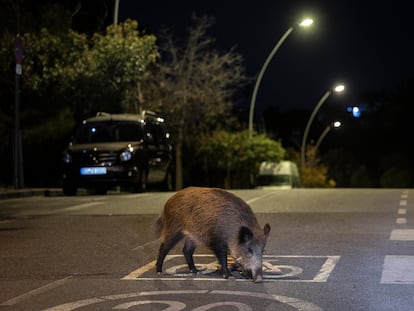
The spread of African swine fever among wild boars in the province of Barcelona is raising concern among local residents and farmers. New cases have been detected beyond the previously established control zone, which could have serious consequences for livestock farming and the regional economy. The threat of the virus crossing the borders of Catalonia is becoming increasingly real, and containment measures require urgent revision.
On Friday, representatives of the Department of Agriculture reported 13 new cases of African swine fever among wild boars. Of particular concern is the fact that two of these cases were found in a residential area of the municipality of Molins de Rei, which lies outside the six-kilometer zone previously considered the epicenter of the outbreak. Now 14 municipalities are at risk, with the boundaries of the danger zone expanding.
Expansion of the risk zone
Until recently, experts believed that the spread of the virus was confined to a certain radius around the first identified case. However, new data show that the infection is capable of overcoming barriers and reaching new areas. This calls into question the effectiveness of previous measures and requires an urgent update of biosecurity protocols.
Catalan authorities have already begun revising their disease control strategy. The primary focus is on monitoring the wild boar population and strengthening controls at municipal borders. Residents and farmers have been warned to strictly observe sanitary regulations to prevent further spread of the virus.
Impact on the region
Expansion of the infected zone could lead to significant economic losses for local pork producers. African swine fever poses no risk to humans but is deadly for domestic and wild pigs. Outbreaks often result in the mass culling of animals, affecting prices and the availability of products on the market.
In municipalities that have entered the new risk zone, inspections and additional sanitary measures are already underway. Authorities urge the public to report any suspicious cases among wild animals and to avoid approaching found carcasses. There is a particular emphasis on informing people about possible routes of virus transmission.
Control and prevention
The situation requires coordination between various agencies and municipalities. In the coming days, additional inspections and analyses are planned to determine the extent of the infection’s spread. Veterinary services are operating on high alert, and farmers are receiving recommendations on strengthening biosecurity measures at their farms.
At the same time, authorities are considering introducing temporary restrictions on the movement of animals and pig farming products between municipalities. Similar measures have already been implemented in other regions of Spain and have proven effective in combating such outbreaks.
Outbreaks of African swine fever occur regularly in Europe, and Spain has repeatedly faced similar threats. In recent years, such cases have also been reported in neighboring countries, forcing authorities to tighten border controls and carry out mass inspections. One need only recall the recent events in Eastern Europe, where the virus spread rapidly among wild boars and resulted in significant economic losses. The experience of past years shows that only coordinated action and strict sanitary measures can stop the spread of infection and protect the livestock industry.