Spain’s rail network has come under scrutiny after numerous track damages and defects were reported across several sections. More than twenty alerts about cracks, worn rails, and other issues remain unresolved, most of them concentrated in Andalucía. As a result, speed restrictions have been imposed on these stretches, and train drivers are being forced to slow down on their own initiative, fearing further accidents.
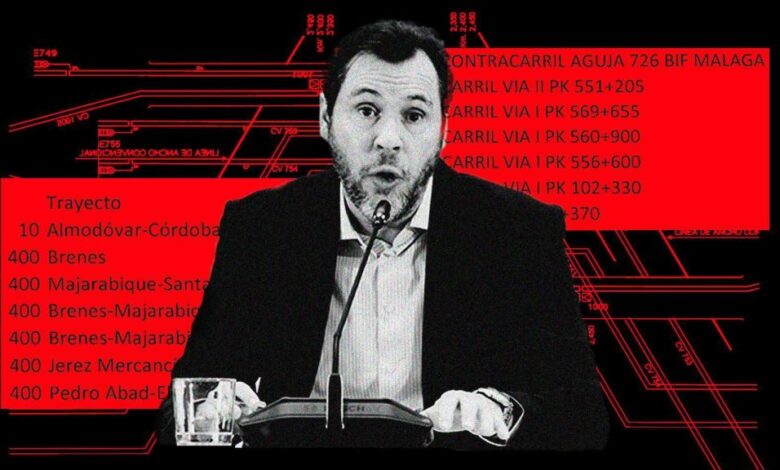
Particular concern surrounds Line 400, linking Alcázar de San Juan and Cádiz, where six damaged sections—still not repaired—pass through cities such as Córdoba, Sevilla, and Jaén. Among the most problematic hotspots are the stretches near Brenes, Majarabique – Santa Justa, the Jerez Mercancías-Jerez freight terminal, and the sector between Pedro Abad and El Carpio.
Danger zones
The situation is further complicated by reports of new breakdowns. Recently, a crack was found on switch 726 near the Málaga junction, just 40 kilometers from the site of the Adamuz tragedy. On this section, trains were limited to 30 km/h, but on the long straight in Adamuz—where the disaster occurred—no such measures were put in place. Trains usually pass through the Almodóvar del Río switch at up to 220 km/h.
The map of problem areas is extensive: warnings are coming not only from Andalucía, but also from Asturias, País Vasco, Navarra, Castilla y León, Aragón, Comunidad Valenciana, Cataluña, and Madrid. The weekly rail status report runs over two hundred pages and covers the entire country from north to south and east to west.
Engine drivers react
Every week, engine drivers receive updated reports on the state of both conventional and high-speed lines. These documents detail all restrictions and incidents that could affect safety. In recent months, drivers have increasingly chosen to reduce speed on suspicious sections at their own discretion, without waiting for official orders. After a series of accidents, unions announced preparations for a general strike, demanding immediate measures to ensure safety.
Discontent is growing within the workforce: many believe management is ignoring real threats, and that attempts to cover up problems could lead to new tragedies. Tensions are rising, and drivers are openly expressing their frustration—they are tired of risking the lives of passengers and their own for the sake of formal reports and paperwork.
Minister’s position
Amid mounting pressure, Transport Minister Óscar Puente has categorically refused to conduct an independent review of the railway network. He claims that all necessary inspections have already been completed and that the condition of the tracks meets European safety standards. At a press conference, the minister emphasized: “We know the state of the network, and we are aware of all its issues.”
However, after the tragedy in Adamuz in January that claimed at least 43 lives, such statements ring hollow. The minister admitted that technical failures can have serious consequences but dismissed suggestions of systemic problems or outdated infrastructure. In his view, the causes of the accident may be much more complex than they appear at first glance, though he did not rule out that the condition of the tracks played a part.
Mounting Tensions
While officials insist everything is safe and train drivers prepare to strike, passengers anxiously follow the news. Each new incident on the rails sparks heated debate and public discussion. Public trust in official statements is eroding, and calls for transparency and independent audits are growing louder.
The situation on Spain’s railways is not just a technical issue. It is a matter of trust, responsibility, and human lives. While some push for formal inspections, others are forced to risk their safety every day to avoid new tragedies. For now, it seems a compromise between safety and bureaucracy remains out of reach.