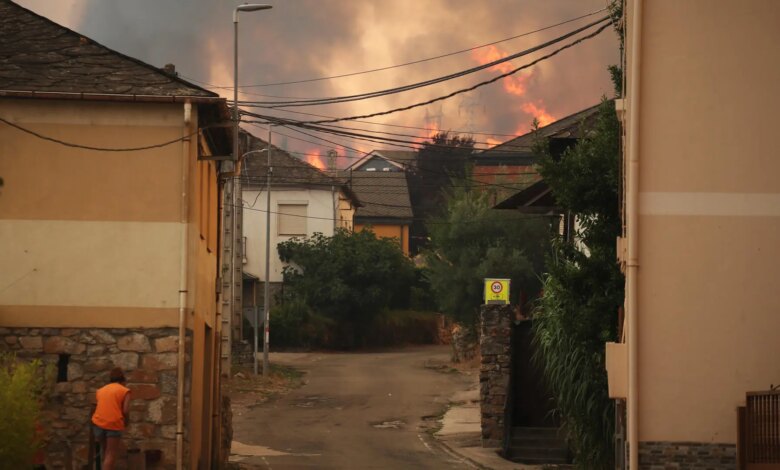
From the beginning of 2025 to August 3, wildfires in Spain affected 39,155 hectares of forests, pastures, and shrubland. This figure is 9% higher than for the same period in 2024, when 35,604 hectares were damaged. Despite this year-on-year increase, the current level of damage remains 37% below the ten-year average of about 62,235 hectares.
According to the Ministry for the Ecological Transition and the Demographic Challenge, 2025 ranks as the fifth lowest year for scorched land in the past decade. The smallest fire-affected areas occurred in 2018, 2016, 2020, and 2024. However, the statistics do not include major fires from the first weekend of August, including the blaze near Yeres (León), where around 800 residents from several villages were evacuated or confined, and the Las Medulas natural monument, a UNESCO World Heritage Site, was impacted.
From January to August, the country recorded 4,735 fire incidents. Of these, 3,274 were contained to areas of less than one hectare and classified as minor outbreaks. There were 14 major wildfires, each affecting more than 500 hectares.
The highest number of fires was recorded in northwest Spain—almost 40% of all cases. Inland regions faced 35% of fires, the Mediterranean coast 24%, and the Canary Islands less than 1%.
When considering damage by type of vegetation, the greatest losses were suffered by inland areas, where more than half of the total affected forest area burned. In Mediterranean regions, about 31% of forests were destroyed by fire, while in the northwest, this figure was 16%. In terms of overall damage structure, 29% occurred in the northwest, 20% on the Mediterranean coast, 50% in inland territories, and just 0.2% in the Canary Islands.
By vegetation type, since the beginning of the year, 9,371 hectares of forest, 18,266 hectares of shrubland and open areas, and 11,518 hectares of pastures and natural meadows have burned in Spain.
Experts note that despite relatively low figures compared to previous years, the situation remains tense due to weather conditions and the risk of new large-scale fires. Authorities continue to strengthen preventive and firefighting measures, and urge the public to exercise caution during the fire-prone season.