The first days of the new year in Spain were marked by alarming news: within just 24 hours, hundreds of migrants arrived on the country’s coasts. Their journeys took them across the dangerous waters of the Atlantic and the Mediterranean, with the Canary and Balearic Islands as their destination. This time, the number of people crossing the border in such a short period was especially high—401 individuals. And these are only the officially recorded cases.
The largest influx was seen on the islands of El Hierro (El Hierro) and Tenerife (Tenerife). Two large boats carrying 310 people were registered here. The remaining migrants landed on the Balearic Islands—Cabrera (Cabrera) and Formentera (Formentera). The geography of migration routes is expanding, and the number of border crossing attempts is steadily growing.
Canary Islands
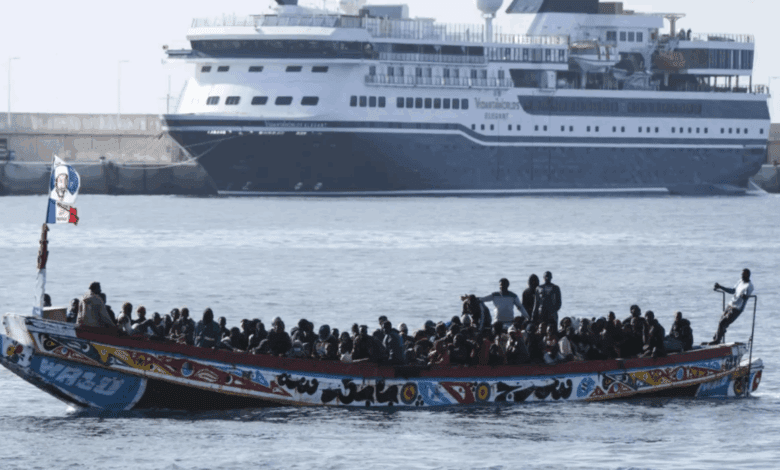
On January 1, a large cayuco—a traditional boat used for long sea crossings—docked independently at the port of La Restinga (La Restinga) on El Hierro. On board were 144 people, most of them men, but there were also women and children. All came from countries in sub-Saharan Africa. Despite the long and dangerous journey, the condition of those arriving was assessed as satisfactory. Emergency services personnel and Red Cross volunteers met the migrants. Fortunately, this time there were no tragedies.
However, just a few days later, the situation changed. Another boat arrived in Tenerife carrying 166 people. Sadly, one of the passengers did not survive the journey. Unfortunately, such incidents are not uncommon, as the sea route to the Spanish coast remains deadly.
Balearic Islands
While all eyes were on the Canaries, significant events unfolded in the Balearic Islands as well. In the first days of January, authorities intercepted five migrant boats. The first was found off the southern coast of Formentera, carrying 16 people. On the same day, closer to midnight, another 26 people were rescued off the northwest coast of Cabrera. All of them came from Sub-Saharan African countries.
The following day brought more alarming reports: 13 people were rescued near La Mola lighthouse, and a little later another 20 were saved off the southern coast of Formentera. The last boat was spotted at night, 60 miles south of the island, with 16 migrants from Maghreb countries on board. Every such voyage is a risk, a leap of desperation, and a hope for a new life.
A test for emergency services
Spanish rescue and emergency services once again found themselves on the front lines. As they met each boat, they provided first aid, temporary shelter, and tried to learn about the circumstances of the journey. This time, despite difficult weather conditions, most arrivals were in satisfactory condition. But tragedy was unavoidable—one person died en route.
Volunteers and medical workers report that the flow of migrants is not diminishing, and the routes used are becoming increasingly diverse. This requires services to remain alert and respond quickly. Once again, Spain faces a challenge with no easy solutions.
Challenges and Questions
The new wave of migration raises pressing questions for Spanish society. Why do people continue risking their lives for an uncertain future? How long can Spain cope with such an influx? And what should be done about those who have already reached its shores?
While some demand tougher measures, others call for compassion and lasting solutions. But one thing is clear: Spain once again finds itself at the center of a migration crisis, and this January has served as a stark reminder of the scale of the problem.