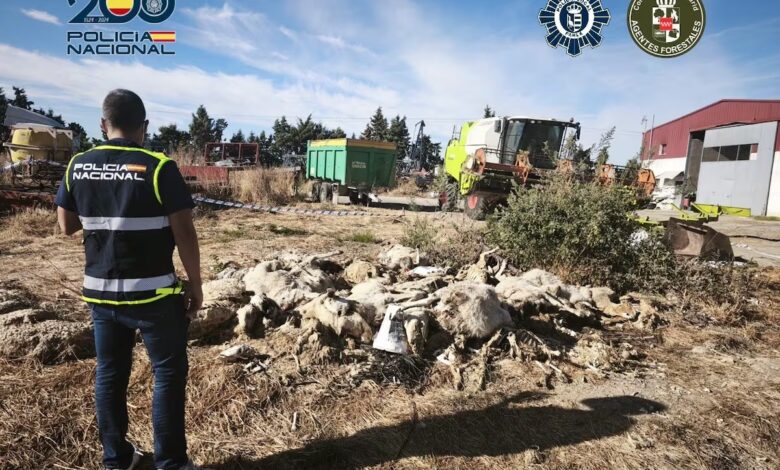
In early autumn 2025, a shocking incident occurred in the suburb of Parla, near Madrid, that stunned local residents. What began as a regular walk with a dog led one of the town’s residents to a disturbing discovery: behind the fence of one of the farms, she noticed a heap of sheep carcasses piled on top of each other. The smell of decomposition and the grim scene left no doubt — the animals had not died recently.
Police officers and animal welfare specialists arrived at the scene. Inside the building where the sheep were kept, conditions were unsanitary: the floor was covered with a thick layer of manure, and the fencing was badly rusted and partially destroyed. Of the 220 sheep on the farm, 50 were already dead, and many others suffered from various illnesses. Some showed signs of respiratory problems, inflammation, lameness, and other symptoms of advanced disease.
The inspection revealed that the animals had not been properly cared for in a long time. The owner of the farm, a 51-year-old man, was unable to provide any documentation for the livestock and had not kept the required records. He claimed that a veterinarian had not visited the property since February 2025. Feed for the sheep was simply dumped onto the dirty floor, and the straw meant for bedding was moldy and black in some areas. Remains of a dead bird were found in the feed, creating an additional health risk to the flock.
Police have arrested the farm owner on suspicion of animal cruelty and negligence that led to the mass death of sheep. This individual had previously come to the attention of law enforcement for environmental violations. Following the arrest, he was remanded to court, where he will have to answer for his actions.
Consequences and public response
The incident sparked widespread public outcry in Parla and beyond. Local residents and animal rights activists are demanding tighter regulation of animal welfare on farms and harsher penalties for those responsible for such violations. Regional authorities have promised to carry out additional inspections of similar farms to prevent a repeat of this tragedy.