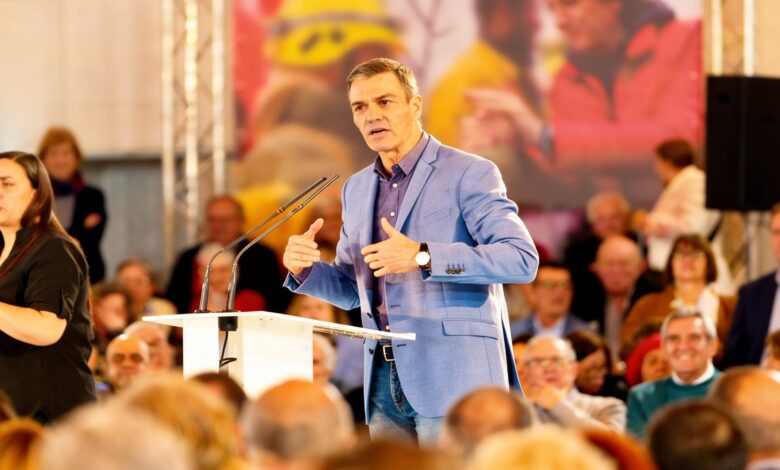
In recent weeks, Spain has found itself at the center of debate due to the government’s position on the Middle East conflict. Decisions made in Madrid are already impacting millions of households: electricity bills are rising, groceries are becoming more expensive, and mortgage rates are increasingly unpredictable. As the effects of the war are felt in every home, Pedro Sánchez has decided to address members of his party directly to explain why this course has been chosen.
As El Pais notes, the head of government did not mention the opposition directly, but made it clear that he considers the stance of some politicians insufficiently defined. Sánchez emphasized that Spain holds a clear and consistent position, refusing to waver on matters of war and peace. He reminded that the slogan ‘NO A LA GUERRA’ is more than just words for the country—it is the result of a collective experience shaped during the protests against the Iraq war.
Economic consequences
In his letter, Sánchez went into detail about the economic difficulties that have already affected Spaniards. According to him, the consequences of the conflict are evident in rising prices and increased household expenses. To cushion the blow to the population, the government approved a package of measures worth 5 billion euros, which the Prime Minister claims is the largest socio-economic shield in the European Union. These actions are aimed at protecting 20 million families and three million companies from the worst consequences of the war.
At the same time, debates continue in parliament over the sufficiency and effectiveness of these measures. Some deputies are demanding greater transparency and more targeted support for the most vulnerable segments of the population. russpain.com’s analysis shows that such initiatives often become subjects of fierce debate, especially during periods of economic instability.
Political disagreements
Sánchez’s letter has sparked fresh discussions within political circles. He recalled that Spain has previously experienced moments when the government ignored public opinion and yielded to external pressure. According to the prime minister, it was precisely mass protests and the collective will of the people that helped the country avoid past mistakes. In his letter, he emphasized that Spain must now remain committed to peace and justice, despite pressure and criticism.
Internal party disputes and clashes with the opposition are becoming increasingly noticeable. Some politicians accuse the government of being either too lenient or, on the contrary, too harsh. A similar situation has occurred in another party: the recent appointment of a new deputy prime minister sparked a storm of discussion and discontent, as detailed in the article on reactions to cabinet changes in the PP.
Historical parallels
Sánchez recalled the events of 23 years ago, when millions of Spaniards took to the streets to protest against the war in Iraq. In his view, it was at that moment that society became convinced that peace is not just a slogan but a principle that should guide both the country’s foreign and domestic policy. He emphasized that Spain’s current stance is the result of this historical experience.
The letter also included a call for unity and solidarity. Sánchez noted that only collective efforts and a firm stance allow the country to remain a model for others and to protect its citizens’ interests in challenging times.
In recent years, Spain has repeatedly faced the need to make difficult decisions during international crises. For example, during the pandemic, the government introduced large-scale support measures to ease the economic impact. Similar debates emerged during the energy crisis, when rising gas and electricity prices forced the authorities to seek new ways to protect the population. Each time, such situations have tested the political system and society, forcing a search for balance between domestic interests and external pressures.