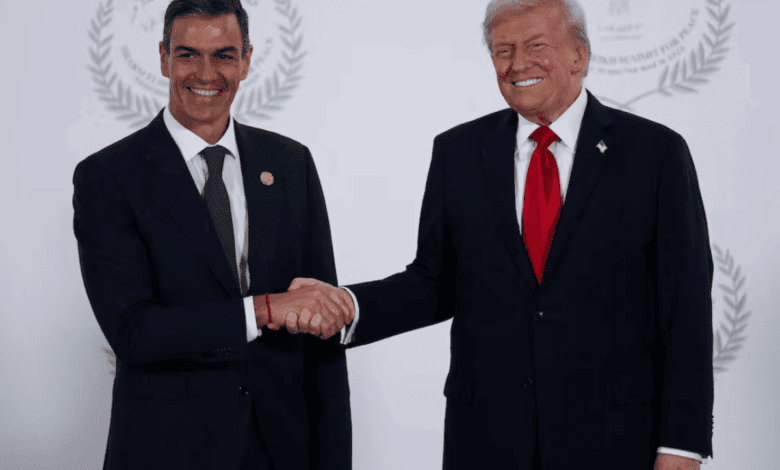
Spanish Prime Minister Pedro Sánchez found himself at the center of a heated international debate after Donald Trump accused Madrid of insufficient defense spending. At a press conference in Brussels, Sánchez faced tough questions head-on, declaring he was ready to personally explain to the American leader where Spain’s billions go. According to him, Spain allocates 34 billion euros annually for military needs—a figure that exceeds the combined defense budgets of thirteen NATO countries.
Trump, in his characteristic style, launched a wave of criticism at Spain, claiming it was the only country that refused to increase military spending to 5% of GDP, allegedly as agreed by the rest of the Alliance’s partners. Sánchez countered by stating that Spain not only isn’t lagging, but for the first time ever has reached NATO’s target of 2% of GDP on defense. Moreover, during his premiership, the country’s military budget has in fact tripled.
Money and priorities
Sánchez emphasized that Madrid is not going to make defense its only priority. According to him, security is not just about tanks and missiles, but also a strong healthcare system, quality education, and support for vulnerable populations. In his view, Spain should not have to choose between guns and schools. The prime minister reminded that the country actively invests in development, international cooperation, and assistance to citizens in need.
In the past two years, Spain has signed record contracts for the purchase of American weapons—over 4.5 billion euros have been spent on Patriot systems and MH-60R helicopters. These are the largest deals in the history of Spanish-American military relations. Sánchez makes it clear: Madrid is ready to strengthen its defense, but not at the expense of social commitments.
Politics and pressure
Debates continue both inside the country and abroad over how much Spain should spend on its military. Some call for following Washington’s lead and raising expenditures to 5% of GDP, while others insist on diplomacy and peaceful initiatives. Sánchez strikes a balance: he does not shirk NATO commitments, but is also not willing to sacrifice internal stability for the sake of external pressure.
The Prime Minister has stated openly that he is always ready for dialogue and is not afraid to explain his position even to the most influential opponents. He is confident that Spain does not deserve the ‘freeloader’ label in the Alliance. In his view, the country demonstrates loyalty and transparency, and its contribution to collective security should not be underestimated.
The Spanish approach
The debate over military spending in Spain has not let up for several years. Society is calling for alternative approaches to security—from developing civil defense to investing in science and education. Many believe that relying solely on weaponry does not guarantee real protection.
Meanwhile, the government continues to navigate between external pressure and internal expectations. Sánchez makes it clear: compromise is not a weakness, but a conscious choice. Spain is searching for its own path, determined not to become a puppet or an outcast in the larger political game. And it seems this approach is attracting increasing interest even beyond the country’s borders.