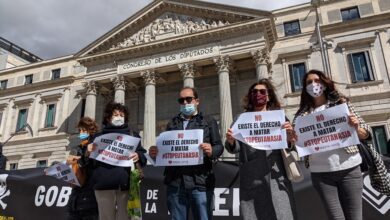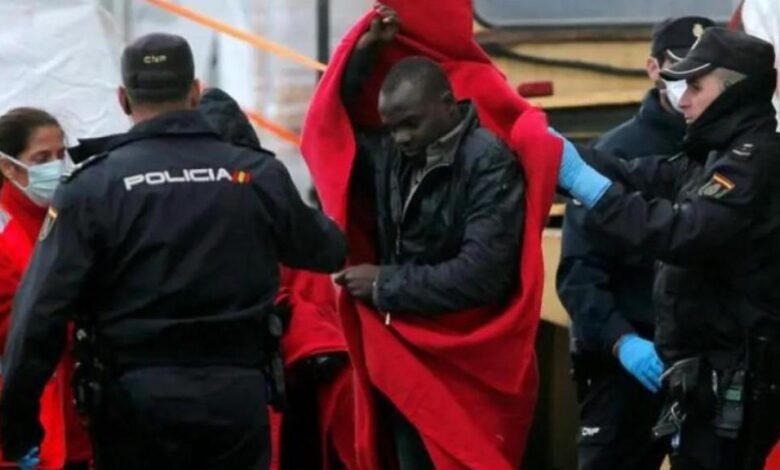
The issue of mass legalization of migrants has once again taken center stage in Spanish society. The authorities’ decision to grant legal status to hundreds of thousands of foreigners has sparked a strong reaction among police professional associations. For many residents, this is more than just another news story — it could mean potential changes in daily life, security, and the work of public services.
The National Police unions, which rarely act as a united front, have come together this time to criticize the initiative. Representatives of four of the largest associations — SUP, UFP, JUPOL, and CEP — have voiced serious concerns. In their view, without increasing staff and providing additional resources, the workload on immigration and border departments could become critical. These services are already operating at maximum capacity, and the coming surge in applications may lead to administrative collapse.
Security risks
The issue of monitoring and vetting new applicants is of particular concern. The unions stress that a lack of criminal convictions does not always mean a person is free of legal issues. There have been cases in Spain where someone had not been convicted but was involved in investigations or linked to unlawful activity. According to experts, mass legalization without individual screening could pose a threat to public safety.
In addition, police representatives point out that neither the Ministry of the Interior nor the migration department has provided clear instructions on how to organize the process. It remains unclear who will be responsible for identity checks, how potential risks will be identified, and who will take responsibility for oversight. With the number of applications possibly exceeding a million and police resources limited, these issues become especially pressing.
Impact on society
Trade unions warn that such decisions could trigger the so-called ‘pull effect.’ In the past, Spain has already experienced legalization waves, each time leading to an increase in the number of new migrants seeking to take advantage of the opportunity. According to JUPOL representatives, these measures may play into the hands of criminal groups involved in illegal migration. On social media, there are concerns that thousands of people will risk their lives to enter the country, hoping for legalization.
Within police structures themselves, anxiety is growing over the lack of clear migration policy. Staff note that most foreign nationals departments are already overloaded with asylum applications. A new wave of requests could bring their work to a standstill. Unions are demanding not only an increase in personnel, but also clear, transparent protocols to avoid chaos and protect citizens’ interests.
Professional standpoint
Some unions prefer to refrain from publicly criticizing political decisions, yet even they admit: the pressure on the police will increase. In particular, UFP representatives note that foreign affairs and documentation units already operate under constant stress. A surge in applications could lead to heightened tensions at the borders and an increase in illegal crossing attempts.
Unions insist on the need to strengthen the legislative framework. In their view, the laws regulating migration issues must be stable and not subject to political fluctuations. Only this approach ensures effective police work and the protection of society’s interests.
Consequences for the country
The issue of mass regularization of migrants is not new for Spain. Over the years, such measures have been adopted by both left and right-wing governments. However, the current situation stands out for its scale and intensity. Unions emphasize that the authorities’ decision may break the consensus formed in recent decades and complicate relations with European partners.
With society and professional circles deeply divided, the further development of the situation remains unpredictable. For many Spaniards, the legalization of migrants is not only a topic of political debate, but also a real challenge for the country’s security system and social stability.