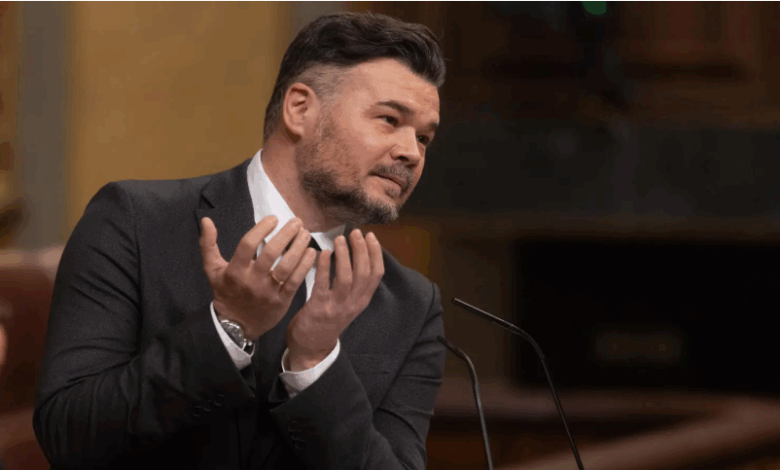
Spain remains gripped by tension following the tragic railway disaster in Adamuz (Adamuz, Córdoba) that claimed dozens of lives. The country’s political scene has erupted: instead of unity and condolences, politicians have exchanged blame, harsh words, and even insults. At the center of the scandal is ERC deputy Gabriel Rufián, who strongly condemned attempts to compare the train tragedy to the recent natural disaster in Valencia (Valencia).
Rufián called such comparisons a “sign of profound abnormality” and insisted that a random disaster cannot be equated with the consequences of negligent officials. His words sparked outrage: representatives of the Partido Popular (PP) accused Rufián of disrespecting the victims and called him a “vulture.” In response, the politician doubled down, stating that the Adamuz tragedy was the result of cruel fate, not anyone’s fault, while in Valencia, in his view, the loss of life could have been avoided if authorities had acted differently.
Tensions on the Rise
The situation escalated just 48 hours after the crash, as sharp comments began circulating on social media. In a post on X (formerly Twitter), Rufián stressed that, in the railway disaster, people received help and information from the very first minutes, whereas in Valencia, he argued, the tragedy was compounded by inaction and incompetence from officials. He specifically singled out former president Carlos Mazón, claiming that “he enjoyed drinks while people were drowning.”
The response was swift. The official PP representative in Congress, Ester Muñoz, publicly accused Rufián of disrespecting the victims and their families. She stated that the politician “has never shown compassion” and compared his behavior to a bird of prey feeding on the grief of others. The question of whether the political “truce” following the tragedy is over remains unresolved, but it is clear that tensions are only escalating.
Government response
At the same time, the Spanish government criticized the leader of the Vox party, Santiago Abascal, who used the tragedy to accuse the current Prime Minister, Pedro Sánchez, of “crimes, lies, and betrayal of the people’s interests.” This statement drew sharp condemnation from officials. At a press conference following the Cabinet meeting, a government spokesperson called Abascal’s behavior “base” and even “inhumane.”
The Minister of Inclusion, Social Security, and Migration added that attempts to exploit fear and tragedy for political gain are unacceptable and run counter to democratic principles. She emphasized that while the exact death toll remains unknown and dozens of people are still fighting for their lives in hospitals, any political speculation appears especially cynical.
The limits of what is permissible
This entire story once again raises an important question: where is the line between political strife and basic human compassion? In Spain, as in many other countries, tragedies often trigger fierce debates and mutual blame. But this time, the tension has exceeded all expectations. Not only did politicians fail to unite in a moment of national grief, they also turned the tragedy into a battleground for settling scores.
The public is watching this with growing frustration. People are demanding respect for the memory of the victims and honesty from decision-makers. But while politicians continue to trade barbs, the real causes of the catastrophe and how to prevent them remain obscured. The question of who genuinely cares about the people, and who is merely exploiting their misfortune for personal gain, remains unanswered.