Two train tragedies — in Cordoba and Barcelona — have become not only national disasters but also sparked turmoil within Spain’s largest opposition party. As the country mourns the victims, a conflict is simmering inside the Partido Popular (PP) between those pushing for a harsh attack on the government and those favoring a wait-and-see strategy. At stake are the political future of Transport Minister Óscar Puente and, possibly, the balance of power in Spanish politics.
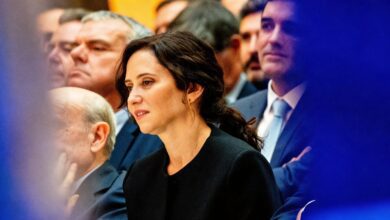
Immediately after the disaster, PP leader Alberto Núñez Feijóo called for restraint and declared three days of mourning, supporting his Andalusian ally Juan Manuel Moreno Bonilla. At the same time, Madrid president Isabel Díaz Ayuso launched a frontal attack, publicly accusing the government of remaining silent and trying to avoid responsibility. Her words sounded like a challenge not only to the authorities but also to her own party leadership.
Two camps
Two clear camps have emerged within the PP. The first, Feijóo’s supporters, believe that composure and restraint will ultimately do the government more harm than outright confrontation. They are convinced that if emotions are set aside, Minister Puente will end up politically isolated, and Sánchez’s government will come under public pressure. The second camp, led by Ayuso, demands immediate and tough action, arguing that hesitation only benefits the socialists.
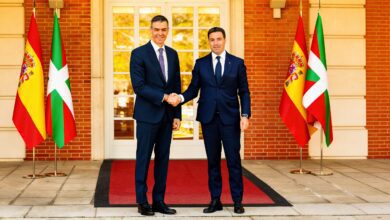
A telling scene unfolded the day after the accident: the president of Andalusia and the prime minister appeared together at the site of the tragedy, demonstrating unity and mutual support. Reconciliatory speeches were made, emphasizing the importance of coordination and solidarity. Yet behind the scenes, the struggle for control over the agenda was already beginning.
A subtle game
Moreno Bonilla, who is facing upcoming elections, tried to avoid openly accusing the Ministry of Transport, despite pressure from journalists and colleagues. His restraint was driven not only by mourning but also by a desire not to repeat past mistakes. At the same time, Feijóo personally managed the rhetoric of his allies, demanding ‘balance’ and not allowing even the most radical party members to move on to direct accusations.
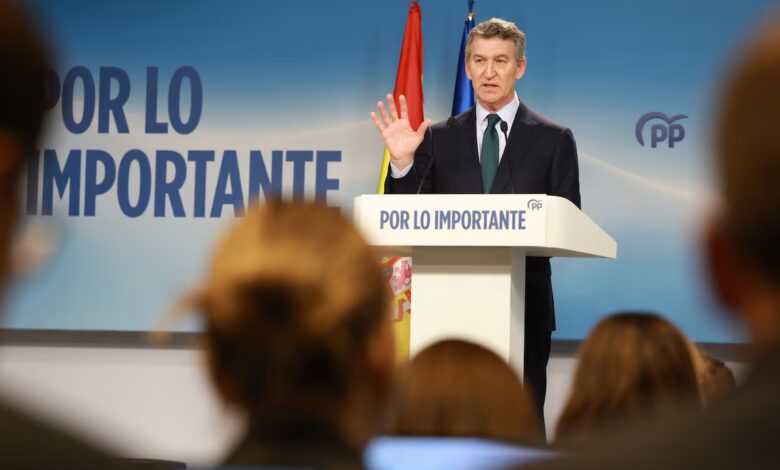
However, by the end of the week, tensions had reached a breaking point. After a deliberate pause, Feijóo sharply criticized the government, accusing it of ‘chaos’ and implying that the state of the railways reflected the condition of the entire country. Despite his tough tone, he never called for Puente’s resignation, which sparked discontent among the party ‘hawks.’
Ghosts of the past
Behind the scenes, members of the PP recall the Angrois tragedy of 2013, when Feijóo was head of Galicia. He personally found himself at the center of a political storm then, which now makes him opt for caution. His inner circle is convinced: it’s more advantageous to let Minister Puente ‘burn out’ in office than to demand his immediate resignation. The party believes that each new week of inaction only increases the minister’s toxicity for Sánchez’s government.
At the same time, while the party leadership remains cautious, the far-right Vox moved swiftly without waiting for the mourning period to end. Party leader Santiago Abascal accused the government of corruption and directly linked the tragedy to embezzlement within the Ministry of Transport. Vox has already filed a complaint against the head of the railway company Adif and refused to participate in the state mourning event scheduled for the end of January.
Political stakes
Internal disputes within the PP are further fueled by the upcoming elections in Aragon, where Vox could gain ground amid the opposition’s indecision. Some PP regional leaders warn: if the party doesn’t toughen its rhetoric, voters may shift their support to more radical forces.
History repeats itself: back in 2015, Feijóo urged not to exploit tragedies for political gain, though previously he himself had accused opponents of responsibility for deaths in the wildfires. Now, finding himself in the opposition, he is caught between pressure from party members and his fear of repeating past mistakes.
Although Minister Puente remains in office for now, the PP is convinced that his political career is effectively over. Within the party, there is a growing belief that each new scandal only deepens the government crisis, and the Minister of Transport will forever be remembered as the ‘minister of the 45 dead’.