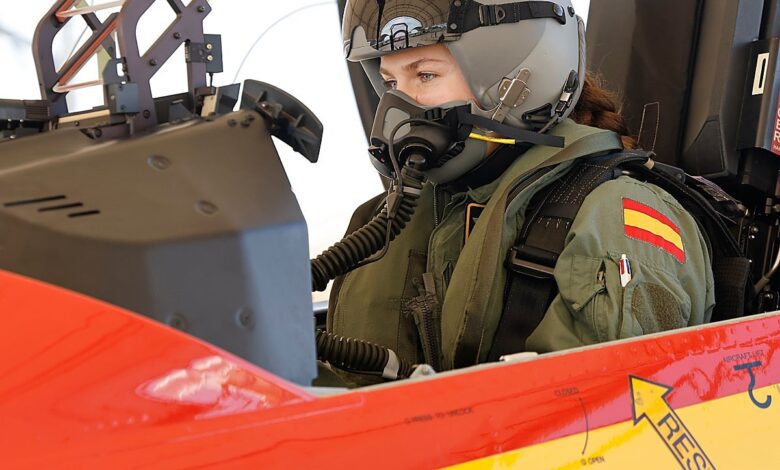
At the Air and Space Academy in Murcia, an event eagerly anticipated by many fans of the Spanish royal family took place. Princess Leonor, the eldest daughter of King Felipe VI and Queen Letizia, took to the skies solo for the first time at the controls of a Pilatus PC-21 training aircraft. This moment was not only a personal achievement for the future queen, but also a significant milestone in her military training, now entering its fourth month.
Before earning the right to fly solo, Leonor underwent intensive theoretical preparation and spent dozens of hours training on simulators. The academy emphasizes not only classic disciplines but also modern technologies: cadets learn to operate drones, study the specifics of space environments, and practice emergency procedures. For Leonor, as for her classmates, this stage was mandatory and required utmost concentration and discipline.
A journey to the skies
In the first weeks of training, the future heir to the Spanish throne learned the basics of piloting on simulators designed to closely replicate real flight conditions. FTD simulators with panoramic views allow trainees to feel as if they’re in the cockpit of a real aircraft and to experience simulated emergency situations. Only after successfully completing this phase was Leonor allowed to move on to practical lessons in the modern turboprop Pilatus PC-21, which recently replaced the outdated Casa C-101 models.
The academy’s administration emphasized that solo flights are permitted only for cadets who are fully prepared for this challenge. No exceptions were made for Leonor: her skills and knowledge were assessed just as rigorously as those of the others. On the day of her first flight, she completed all the necessary procedures: instruction, technical inspection of the aircraft, paperwork, and the mandatory pre-flight briefing.
The moment of truth
December 18 became a day Princess Leonor will remember for the rest of her life. Dressed in full flight gear, helmet on and eyes full of confidence, she took the pilot’s seat and soared the plane into the sky. According to academy rules, during the first solo flight, no other aircraft may approach the cadet to ensure maximum safety. For this reason, photos and video of the event were only taken after landing.
When the plane landed safely at the airfield, Leonor was greeted with applause and congratulations. In the photos published later, she proudly displays a special patch on her sleeve—a sign that she has successfully completed her first solo flight. This symbolic gesture has become an inspiring example of determination and perseverance for many.
New horizons
After completing this stage of her training, Leonor was able to leave for the Christmas holidays, which will last until January 8. She still has a few months of military service ahead, after which she will finish her army training and move on to a civilian education. Over the past year, the princess has already completed internships with the army and the navy, and now she has added aviation experience to her résumé.
The academy notes that the training program for the future head of state was designed to meet modern standards and includes not only flight practice, but also the study of new technologies and the development of leadership skills. For Leonor, this is not only a challenge but also a chance to prove her readiness for her future role.
In case you didn’t know, Princess Leonor is the first woman in Spain’s history to undergo such comprehensive military training as heir to the throne. Born in 2005, she has been preparing for the role of future queen since childhood. In addition to her military education, Leonor is fluent in several languages and actively participates in the country’s public life. Her studies at the Air and Space Academy in Murcia are part of a large-scale program to prepare her for her future state duties.