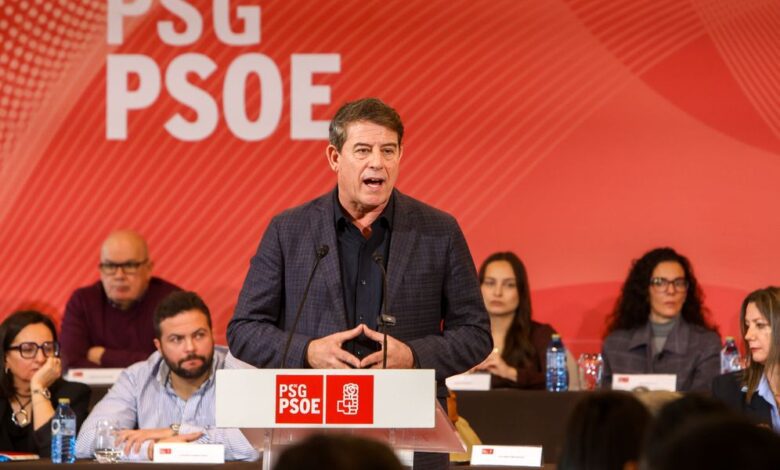
Tensions remain high in Galicia (Galicia) surrounding the regional branch of the Spanish Socialist Workers’ Party (PSdeG). Following a series of high-profile allegations of sexual and workplace harassment involving senior party members, Socialist leader José Ramón Gómez Besteiro (José Ramón Gómez Besteiro) issued a sharp statement. He emphasized that these events are not a sign of weakness in the organization, but rather demonstrate its commitment to principles and readiness to respond to challenges.
Public attention in recent weeks has focused on two major incidents. In Lugo (Lugo), former president of the Provincial Diputación José Tomé (José Tomé) became embroiled in scandal after allegations of sexual harassment. In Barbadás (Barbadás, Ourense), mayor Xosé Carlos Valcárcel (Xosé Carlos Valcárcel) faced a complaint of workplace harassment. Both politicians have so far refused to resign, despite mounting pressure and calls for their departure.
Party response
Speaking to party members in Santiago de Compostela (Santiago de Compostela), Besteiro made it clear: PSdeG does not intend to turn a blind eye to such incidents. He described any conduct that contradicts party values as repugnant and promised that any violations would be addressed. According to him, the party acts swiftly and decisively, without yielding to public pressure or media noise.
He also noted that the party has an internal channel for submitting complaints, which guarantees the confidentiality of applicants. However, Besteiro warned that any attempts to misuse this tool for personal gain would be strongly condemned. In his view, abusing the system harms not only the victims, but also the very idea of fighting for women’s rights.
Internal contradictions
Disputes continue within PSdeG. More than five hundred party members have openly criticized the leadership’s actions, calling them insufficiently transparent and consistent. Some socialists demand the immediate resignation of those involved in the scandals, while others call for the presumption of innocence to be respected. Against this backdrop, Besteiro emphasizes that the decision to resign is a personal matter for each individual, but the party has the right to demand accountability.
Interestingly, Besteiro himself refrained from commenting on specific cases related to labor harassment complaints against the mayor of A Coruña, Inés Rey. These cases are being addressed at the federal level, and the regional leadership prefers not to intervene in the process.
Feminist agenda
The leader of the Galician socialists continually emphasizes that feminism is part of the party’s DNA. He insists that any allegations must be handled with the utmost respect for the alleged victims. According to him, PSdeG will not tolerate silence, inaction, or any attempts to discredit those affected. Besteiro stresses that all victims deserve the same treatment, regardless of the accused’s status.
At the same time, he warns his fellow party members against airing internal conflicts in public. In his view, such disputes benefit political opponents who are in no hurry to address their own scandals.
Public stance
Besteiro concluded his remarks by affirming his full personal commitment to feminist values. He made it clear that the party does not intend to compromise its principles, even if this leads to internal disagreements. Issues of respect, dignity, and the protection of women’s rights remain a top priority for PSdeG, despite pressure and criticism.
Tensions remain high within the Galician branch of the socialists. Internal debates, accusations, and calls for change persist. However, the party leadership is demonstrating a willingness to engage in open dialogue and is not afraid to make unpopular decisions. The only question is whether this will be enough to restore trust and unity within PSdeG.