The situation on Catalonia’s railways is once again causing concern for thousands of local residents. Following a recent major disruption affecting Rodalies, which led to the dismissal of two top transport company executives, recovery efforts are proving difficult. Since early morning, key routes have experienced delays and some trains have been canceled altogether. For many Spaniards, this is more than just an inconvenience — these are essential daily routes for work, study and other commitments, directly impacting the pace of life in major cities and suburbs.
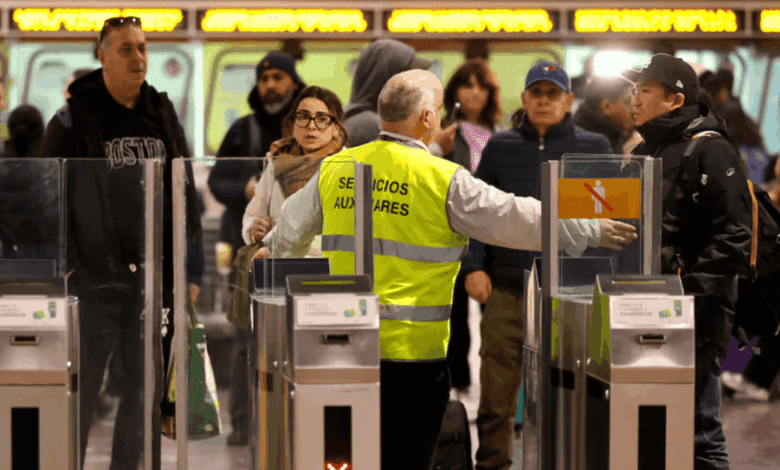
In Barcelona’s main Sants station, passengers faced long lines and uncertainty. Lines R1, R2, and R4 started the day with delays, and in Girona, the first reports of canceled services emerged in the morning. Antonio Carmona, Renfe’s representative in Catalonia, tried to reassure the public, stating that operations resumed within ‘reasonable limits’ and according to a pre-approved plan. However, for many rail users, these assurances seemed unconvincing against the reality of ongoing disruptions.
Emergency measures
Authorities were forced to respond quickly to the transport collapse. To compensate for the rail disruptions, 150 buses were deployed, and around 700 information assistants from Renfe, Adif, the Catalan government, and the Barcelona city council have been stationed at stations and onboard trains. Despite these efforts, passengers complain about a lack of information and confusing schedules. Many compare the situation to the chaos of the previous day, when, due to a double failure at Adif’s traffic control center at França station, trains were repeatedly stopped and restarted.
While technical specialists continue inspecting 69 vulnerable spots and 23 critical points of the rail network, most routes remain only partially operational. The Catalan authorities have decided to increase the number of intercity buses to help ease travel for residents and visitors in the region. However, even these measures cannot fully compensate for the widespread railway service disruptions.
Causes and consequences
The Rodalies disruptions were caused by a major technical malfunction—a software failure at the train traffic control center. This not only brought suburban routes to a halt but also resulted in delays on the high-speed line between Madrid and Barcelona. As a result, thousands of passengers found themselves stranded, and the region’s transport system was left on the brink of collapse.
The dismissal of Rodalies operations director Josep Enric García Alemany and Adif operations chief Raúl Míguez Bailo was an attempt by the authorities to demonstrate their determination to restore order. However, many experts and ordinary passengers doubt that staff changes alone can quickly improve the situation. On social media and forums, discussions focus not only on technical problems but also on the chronic underfunding of Catalonia’s railway infrastructure.
Public response
Rodalies passengers express frustration not only over delays but also the lack of clear information about schedules and routes. At Barcelona and Girona stations, morning hours were filled with tension: people rushed to work but could not figure out when and where their train would depart. Many were forced to switch to buses or look for alternative ways to reach their destinations.
Authorities in Catalonia and transport companies promise to restore regular service soon, but no exact timeline has been given. Meanwhile, residents continue to deal with uncertainty and are forced to check for schedule updates daily. For many, this situation has become yet another reminder of the need to modernize the transport system and improve its reliability.