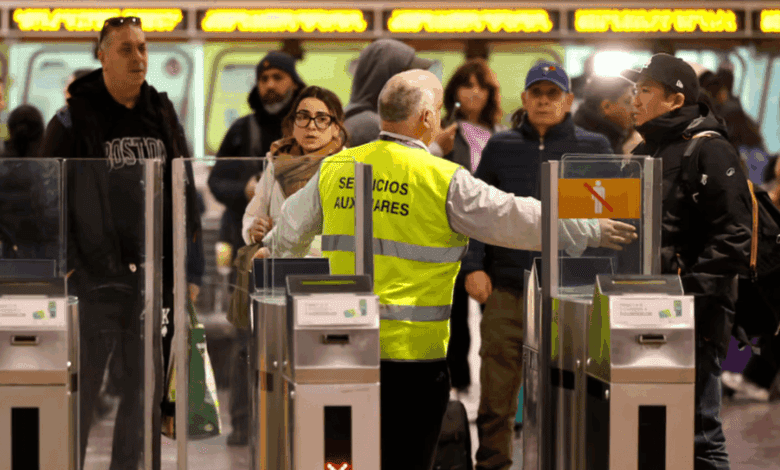
Catalonia is once again at the center of a transport collapse: a mass train driver strike has completely disrupted the usual rhythm of railway service. For local residents, this means not only lost time but also the impossibility of planning trips, work schedules, and personal matters. Hundreds of people are stranded on platforms, unsure when or how they will reach their destinations.
Since early Monday morning, key Rodalies and regional lines have seen widespread cancellations and delays. Even high-speed trains have not been spared disruptions. Passengers, already accustomed to the unstable railway service, now face a new wave of uncertainty. Electronic boards and mobile apps fail to deliver reliable updates, while station staff are left shrugging their shoulders.
Timetable derailed
Officially declared minimum services were supposed to keep two out of three trains running during rush hours. However, in reality, these standards are not being met: trains remain out of service, and the schedule has become a fiction. Renfe advises seeking alternative transport options, but for many residents of suburbs and small towns, this is almost impossible.
The situation is especially tense on routes connecting Barcelona with coastal and inland areas. The R2 Sud and R1 lines, which are traditionally overcrowded, are experiencing disruptions today. Passengers are forced to wait for trains for over an hour, and sometimes even have to return home. Social media is flooded with reports of packed carriages and crowding on the platforms.
Reasons for the protest
The strike has been organized by several unions at once, including Semaf, CGT, SF-Intersindical, Alferro, CC.OO., UGT, and the Renfe group committee. Their main demands are improved workplace safety and better quality of service. The escalation was triggered by recent railway accidents, including those in Adamuz and Gelida, which sparked outrage among both employees and passengers.
The Catalan authorities are recommending that employers switch staff to remote work wherever possible. However, not everyone is able to take advantage of this option. For many, the train is the only way to get to the office or educational institution. As a result, thousands have been left in limbo, unsure of how to organize their day.
Public reaction
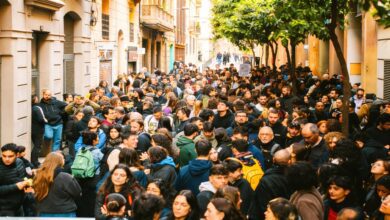
Passenger dissatisfaction has been growing by the week. Over the past three weeks, the Rodalies service has already been experiencing disruptions, but now the situation has reached a critical point. Last Saturday, Barcelona saw a large-scale protest against the poor state of the railway infrastructure. People are demanding not only the return of a reliable timetable, but real investment in network modernization.
A recent survey conducted by the Center for Public Opinion Research showed that the average rating of Renfe’s performance is only 4.2 out of 10. And that’s even before the current wave of cancellations and delays. Passenger expectations are not being met, and trust in the transport system is declining.
Consequences for the region
Minimum services established for the duration of the strike range from 33% to 66% depending on the time of day. During the morning rush hour, from six to half past nine, two-thirds of trains were supposed to run. In reality, many trains never departed. This led to chaos at stations and mass complaints against the operator.
Railway problems affect not only daily commutes but also the region’s overall economy. Businesses face logistical disruptions, and tourists are forced to adjust their plans. Authorities are having to respond urgently, but so far the measures taken have not yielded tangible results.
In recent years, railway strikes in Spain have become a regular occurrence. In 2024, a similar protest in Madrid caused widespread disruptions and demonstrations. At the time, authorities promised reforms, but systemic issues remained unresolved. In 2025, Andalusia also experienced disruptions due to drivers demanding improved safety and better working conditions. Each time, the impact is felt not only in major cities but also in smaller towns, where alternative transportation is scarce. The situation in Catalonia is another reminder of the fragility of the transport system and the urgent need for change.