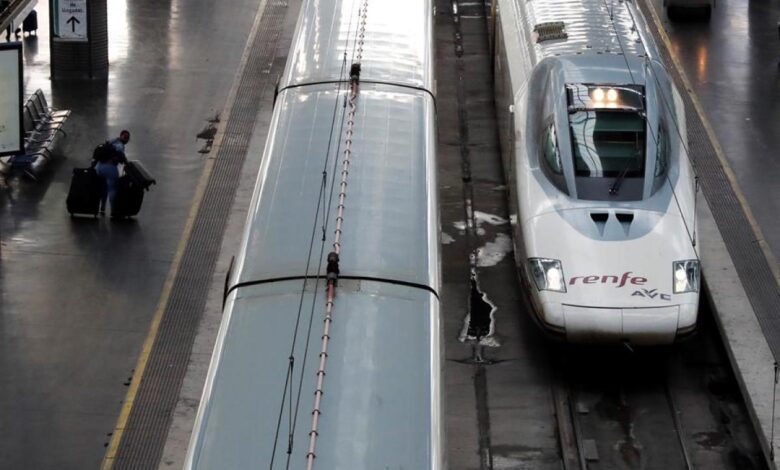
In February, Spain’s railway system faced major disruptions due to a large-scale strike affecting both daily commuters and long-distance travelers. The Ministry of Transport released a list of trains that would continue operating during the protests to minimize inconvenience for the public. This measure is particularly important for those who rely on rail services for work, studies, or family matters.
The strike was a response to recent tragic incidents on the railways, which sparked a nationwide debate about infrastructure safety. As a result, thousands of train services across the country were either canceled or reduced, forcing passengers to urgently adjust their plans. Authorities have set minimum service levels for different types of trains to ensure at least partial operation on key routes.
Train schedule
During rush hours, commuter trains will run at 75% of their usual schedule, while only half of the regular services will operate at other times. This means residents of major cities can expect relatively stable service in the morning, midday, and evening, but train intervals will be longer during off-peak hours.
On medium-distance routes, 65% of nearly two thousand scheduled services will remain operational—that’s over a thousand trains that will continue to run. For Renfe high-speed routes, 73% of almost one thousand services will be maintained, while Iryo and Ouigo will operate at 74% and 73% respectively. Thus, despite the strike, the majority of high-speed trains will still be in service, though with noticeable cutbacks.
Restrictions and exceptions
In total, Renfe alone has canceled 955 trains, including 272 high-speed and long-distance services and 683 medium-distance trains. Besides Renfe, the strike will also affect other operators: Iryo, Ouigo, as well as Adif and several companies involved in freight and logistics. As a result, it’s not only passengers but also businesses that will face disruptions in goods transportation.
Departments responsible for train servicing and logistics are also joining the protest, which could lead to additional delays and disruptions. Some unions have already voiced discontent with the established minimum service standards, considering them excessively high and unfair to other regions of the country.
Causes and consequences
The strike was prompted by two recent fatal incidents on the railway—in Adamuz (Córdoba) and Gelida (Barcelona), where train drivers lost their lives. These tragedies have once again raised concerns over rail safety and the urgent need for reforms. Workers are demanding better working conditions, higher safety standards, and a fairer distribution of workload across regions.
The minimum service levels set by the ministry have sparked debate among unions. Some argue that the conditions in Catalonia are more lenient than in the rest of the country and are calling for standardized requirements. Authorities, on the other hand, insist on the need to maintain essential routes to avoid paralyzing the economy and daily life.
Context and comparisons
Recalling recent events related to transport difficulties in Catalonia, it becomes clear how vulnerable Spain’s transportation system is to such disruptions. In a recent article on RUSSPAIN.COM the consequences of rail service interruptions for local residents were discussed in detail, when buses could not handle the influx of passengers and the restoration of service was delayed. These incidents showed that even brief interruptions can cause serious problems for thousands of people forced to seek alternative ways to get around.
In recent years, Spain has already faced transport strikes that have led to mass flight cancellations and delays. For example, in 2024, a similar action by railway workers caused significant disruptions to the schedule and forced many passengers to switch to buses or cars. Back then, as now, the authorities implemented minimum service levels to prevent a total system collapse. However, each time such events become a challenge for the entire country, highlighting the importance of maintaining stable transportation infrastructure.