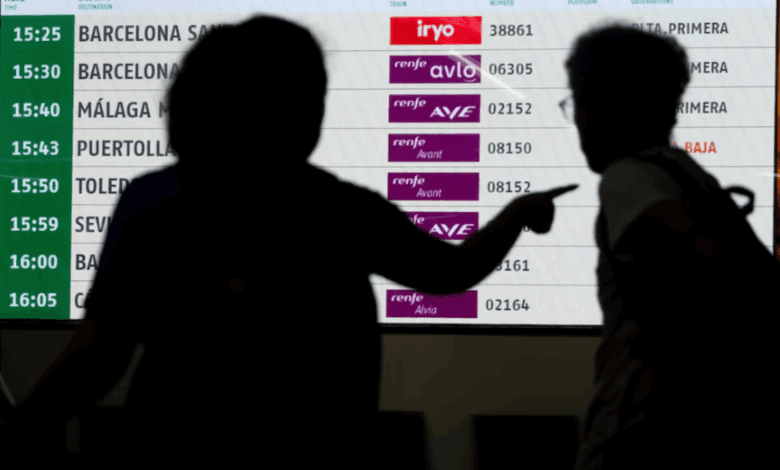
The railway disaster in Adamuz (Adamuz, Córdoba) once again highlighted the fragility of Spain’s transport system. After the tragedy that claimed lives and left many in confusion, Renfe was forced to urgently overhaul all logistics between Madrid and the south of the country. The high-speed line was completely paralyzed, leaving thousands of passengers stranded.
Starting January 20, the company is implementing a temporary transportation plan to maintain at least some mobility along this crucial route. These interim measures include not only trains but also buses, resulting in longer travel times. Renfe requests that these services be used only by those who truly need to travel—the situation is far from normal.
Temporary Routes
As part of the emergency plan, passengers are offered a combined ticket allowing transfers between trains and buses. For example, special shuttle buses now run in both directions between Córdoba and Villanueva de Córdoba (Villanueva de Córdoba). This is a forced measure, but the operator has no other choice.
The timetable has also changed. From Madrid (Puerta de Atocha station), trains to Sevilla (Sevilla Santa Justa) depart at 7:00, 11:00, 15:00, and 19:00, and to Málaga (Málaga María Zambrano) at 9:00, 12:00, and 17:00. In the opposite direction, trains leave Sevilla at 6:03, 9:55, 14:01, and 18:03, and depart Málaga at 7:55, 11:55, and 15:55. Stops en route include Ciudad Real and Puertollano, as well as Antequera for the Málaga-bound trains. There will be no intermediate stops on the Córdoba–Sevilla line.
Prices and Refunds
All tickets are sold in tourist class only, and the fixed fare for the entire route to Málaga or Sevilla is 40 euros. For intermediate stations, the price is calculated based on distance. Renfe allows passengers to return their old ticket for free and purchase a new one at the emergency rate, or exchange tickets with a refund of the fare difference. While this helps to mitigate the inconvenience, it is unlikely to make up for the lost time and stress.
In addition, the company is launching extra trains on conventional, non-high-speed lines. From Madrid (Chamartín), departures to Sevilla are at 7:00, to Cádiz at 15:00, and to Granada-Almería (Huércal) at 16:25. In the opposite direction, trains leave Cádiz at 6:35, Almería-Granada at 8:31, and Sevilla at 15:00. The Córdoba – Cádiz route includes stops in Jerez de la Frontera, El Puerto de Santa María, and San Fernando. Passengers from Huelva have transfer options via Sevilla.
Additional measures
Renfe has increased seating capacity on the Madrid – Extremadura – Sevilla line by adding 736 extra seats. On certain days in January, special services will run: from Madrid to Sevilla at 10:55, and from Sevilla to Madrid at 11:50. All cross routes are temporarily suspended, so passengers will have to change trains in Madrid.
On some routes, such as Algeciras – Málaga, Ronda – Antequera, Málaga – Algeciras, and Antequera – Ronda, buses are being provided at specific intervals. This solution is not ideal, but in the current crisis it is the only feasible option.
Tragedy and Solidarity
On the evening of January 18, when the accident occurred, Renfe immediately activated a special assistance service for victims and their families. A hotline has been set up to provide psychological support and up-to-date information. The company expressed its condolences to the families of the deceased and thanked everyone working tirelessly at the scene of the tragedy.
The situation remains tense. Renfe is forced to operate under force majeure, and passengers have to endure the inconveniences. But at times like these, it becomes clear that even the most reliable systems can fail, and human solidarity and the willingness to help each other come to the forefront.