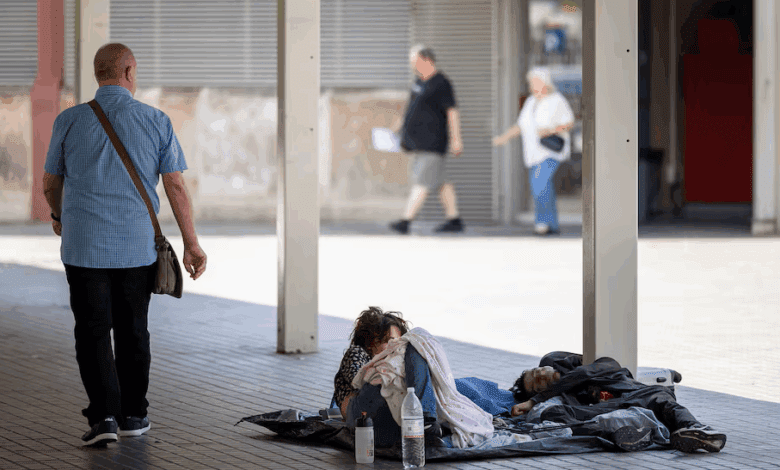
In 2024, Barcelona once again found itself in the spotlight due to alarming statistics: the number of hate crimes committed against homeless people has risen by more than a third. These figures were published in the latest report from Spain’s Ministry of the Interior and have sparked widespread public debate.
Barcelona ranks first in the country for the number of such incidents. Of the 24 registered cases across Spain, six occurred in the Catalan capital and its surrounding areas. This means that one in four cases takes place in this region, highlighting the severity of the problem.
Experts note that hatred towards the homeless often stems not from malice, but from fear. Modern Spanish society faces growing social instability, and many residents are afraid of finding themselves in a vulnerable position. As a result, homeless people become targets of prejudice, aggression, and even violence.
The concept of aporophobia—fear and rejection of the poor—was first introduced into academic discourse back in 1990. Today, it is more relevant than ever. People prefer to ignore those living on the streets, trying to keep their distance out of fear that poverty might be contagious. However, the line between “us” and “them” is becoming increasingly blurred: economic hardship, unstable employment, housing issues, and mental health challenges can at any moment disrupt anyone’s way of life.
In the past, poverty was often associated with unemployment or lack of money, but today the causes have become more complex. Loneliness, unstable family relationships, difficulties accessing housing and healthcare have all been added to the mix. As a result, even those who until recently felt secure may find themselves among the vulnerable.
Society has traditionally sought ‘scapegoats’ onto whom fears and anxieties can be projected. Throughout different periods, these groups have changed, but today in Spain, people experiencing homelessness are increasingly becoming the targets of public discontent. They are seen as a source of danger, disorder, and instability, though in reality they simply reflect the problems that already exist within society.
In Barcelona, as in other major cities, the homeless often go unnoticed, despite living literally side by side with ordinary residents. Very few people dare to make personal contact, though this could help break down stereotypes and reduce fear. Experience shows that getting to know and communicating with homeless people helps us see them first and foremost as individuals rather than as an abstract social issue.
The increase in crimes driven by aporophobia is an alarming signal for Spanish society as a whole. It points to the need not only for tougher measures to protect vulnerable groups but also for deep changes in how poverty is perceived. Experts stress that no one is immune to life’s challenges, and only solidarity and mutual support can offer an answer to the issues of our time.
The authorities of Barcelona and Catalonia have already announced plans to strengthen prevention of such crimes and expand support programs for the homeless. However, experts believe that real change requires not only the efforts of police and social services, but also a shift in societal attitudes toward its most vulnerable members.