The tragedy in Adamuz has become one of the most discussed events in Spain in recent months. The large-scale accident involving Iryo and Alvia trains in the province of Córdoba claimed the lives of 45 people, 28 of whom were residents of Huelva. For many Spaniards, this incident represented not only a personal loss but also prompted reflection on the government’s response to such disasters. Attention has focused not only on the organization of the memorial ceremony, but also on the actions of key political figures in the country.
On Thursday, the doors of the Carolina Marín sports arena were opened to everyone wishing to pay their respects to the victims. Organizers expected a large turnout, and those expectations were met: by 4:00 p.m. the flow of visitors started to increase and by the start of the ceremony, the hall was almost full. Inside, over 500 chairs were arranged for relatives and loved ones, while city residents gathered in the stands to support the families during this difficult time. The venue had a total capacity of 4,500, and it is possible that this number was exceeded.
Monarchs and society
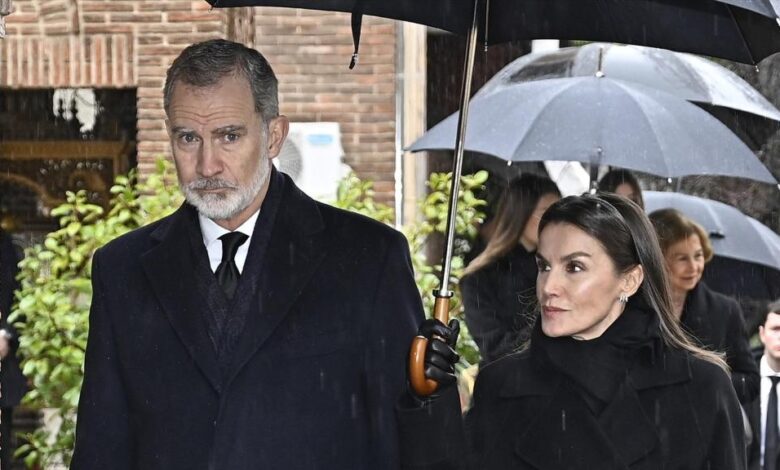
Particular attention was drawn to the presence of King Felipe VI and Queen Letizia, who led the religious part of the ceremony. Their appearance was seen as a symbol of support and solidarity with the affected families. For many residents of Andalusia and the entire country, this gesture from the monarchy was especially meaningful in an atmosphere marked by grief and tension.
At the same time, the absence of Prime Minister Pedro Sánchez triggered a strong response. The families of the victims openly expressed their displeasure at his possible presence, which led to the cancellation of the planned secular farewell organized by the central government. Instead of the prime minister, the ceremony was attended by Deputy Prime Minister and Minister of Finance María Jesús Montero, who also serves as the general secretary of the Andalusian Socialists and is running for the head of the autonomous community.
Political backdrop
Other high-ranking officials were also present at the memorial ceremony: the president of the Junta of Andalusia Juanma Moreno, ministers Torres and Planas, as well as representatives of local authorities and the clergy. However, it was Sánchez’s absence that became the focus of lively public and media discussions. Many are now questioning how such decisions affect perceptions of authority and trust in government during times of crisis.
The event was organized down to the last detail: the Huelva municipality provided free transportation for anyone wishing to attend the ceremony. Special bus routes operated from 15:45 to prevent traffic congestion and make it easier for people to reach the sports arena. This approach allowed many residents of the city and surrounding areas to personally offer their condolences and support the families of the victims.
Reaction and consequences
Debates continue both on social media and in the city streets about whether the prime minister’s decision not to attend the funeral was justified. Some believe Sánchez should have shown personal involvement despite the protests, while others support his choice, citing the families’ wish to avoid politicizing the tragedy. In any case, this episode is yet another example of how public expectations and political decisions can come into conflict.
While the whole country remains focused on the aftermath of the accident and the fate of the victims, the question of leaders’ roles in such moments remains unresolved. For many Spaniards, it is especially important now to see not only official statements but real action from those at the helm of the country. It appears this episode will be discussed for a long time—both in the corridors of power and among ordinary citizens.