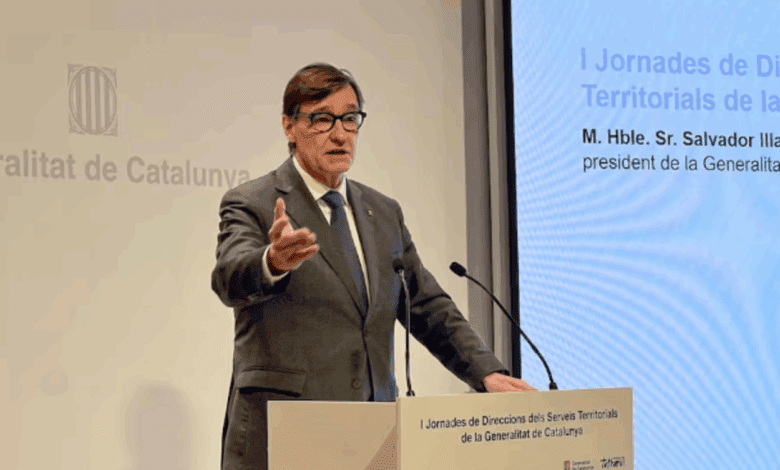
Debate over revising the distribution of funds among Spain’s autonomous communities has flared up once again. This time, the initiative comes from Pedro Sánchez, and the reason is clear: to salvage the Socialists’ standing in Catalonia, where Salvador Illa’s government hangs by a thread. The government’s survival depends on the backing of Esquerra Republicana, who have set their own terms—a special financial arrangement for the region.
Reforming the financing system is a topic that politicians usually approach with caution. The last time anyone dared tackle it was José Luis Rodríguez Zapatero—only after intense pressure from Catalan nationalists and powerful regional leaders. Nearly two decades have passed since then, and the system has in fact been outdated since 2014. No one wanted to take the risk until the threat of losing control over Catalonia became too real.
The Catalan Dilemma
At stake now is not just political stability, but the future of the Socialists in one of the country’s key regions. If Illa fails to secure a new agreement, Esquerra Republicana could withdraw their support at any moment. That would put not only his government at risk but also the Socialists’ broader strategy in Catalonia, which remains their main stronghold.
So far, the details of the agreements between Moncloa and Esquerra Republicana leaders remain under wraps. What is known is the principle of ‘ordinariness’: if Catalonia is the third largest contributor to the national budget, it should also be the third largest recipient. This is Esquerra Republicana’s demand, one the Socialists are compelled to accept to keep their fragile alliance alive.
Money and Power
However, the Catalan republicans want more—a full control over the collection of income tax (IRPF). This is where a significant problem arises: Catalonia simply lacks the technical capacity to administer such a major tax independently. Moreover, PSOE fears this could be the first step toward the region’s financial independence, a prospect that worries many in Madrid.
So far, there is no talk of a ‘concierto’ like the Basque arrangement. But even discussions of special status for Catalonia are already provoking a storm of emotions from the opposition. Right-wing forces are predicting the breakup of the country, despite the fact that there is no concrete information about the agreement yet. Meanwhile, radical separatists in Junts believe that Catalonia will once again get less than it deserves.
Political maneuvering
This story is not just about money, but also political calculation. For Sánchez, it’s crucial to keep Illa in power to maintain influence in Catalonia. For Esquerra Republicana, this is a chance to secure concessions that once seemed impossible. And for the opposition, it’s an opportunity to accuse the government of betraying national interests.
Interestingly, those who are now the loudest critics of a possible deal did nothing to reform the financing system when they had the chance. Now, they’re using the situation for political attacks, not even waiting for the details to be published.
Waiting for a resolution
It remains unclear how this complex standoff will end. Details of the agreement are expected to emerge in the coming days, but one thing is already evident: neither side is willing to compromise without a fight. The Catalan issue is once again at the forefront of national attention, and the stakes in this game are higher than ever.
Still, realistically, there’s no looming catastrophe for Spain’s unity. But neither Illa nor Sanchez should expect an easy win. Tough negotiations, heated debates, and possibly new surprises lie ahead. Spanish politics is never dull, and this time is no exception.