The repercussions of the escalation in the Middle East are already being felt in Spain: rising fuel prices and market uncertainty have prompted authorities to speed up discussions of new support measures. The main focus is on protecting families and businesses from the economic shocks caused by the conflict between the US, Israel, and Iran. The question of how exactly Spain will respond to these challenges has become central for both politicians and citizens.
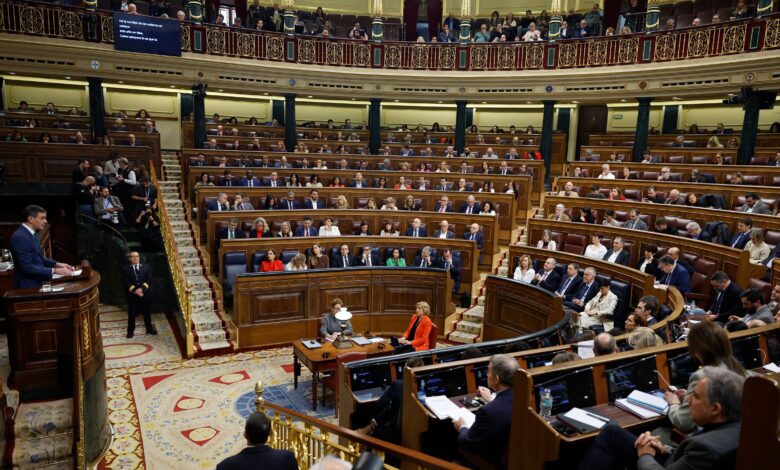
Prime Minister Pedro Sánchez has announced he will address Congress on March 25, where he intends to detail Spain’s position on the situation involving Iran. As highlighted by El Pais, this decision coincided with calls from both the opposition and coalition partners, demanding immediate adoption of anti-crisis measures. In the coming week, Sánchez will take part in a government oversight session, but due to the visit of a foreign delegation, he will not be able to give clarifications immediately. His address to deputies will also include an analysis of the outcomes from the European Council meeting held on March 19 and 20.
Pressure on the government
As the government prepares for the address, the opposition and coalition partners are ramping up pressure, demanding more decisive action. The recent failure in Congress of the social shield law—which aimed to protect vulnerable families from eviction—has prompted new initiatives. In response, according to El Pais, the government has promised to resubmit the key provisions for consideration to prevent the situation for citizens from worsening.
The coalition parties and the opposition have already put forward their own proposals. For example, Podemos registered a bill in parliament called the ‘anti-Trump plan’, while Partido Popular leader Alberto Núñez Feijóo announced the drafting of an ’emergency assistance plan’ to address rising prices. On Monday, representatives of Partido Popular set out their demands, focusing on reducing the tax burden and aiming to get ahead of the government on anti-crisis measures. According to russpain.com, this kind of competition between parties may speed up decision-making but also intensifies political tension.
Political disagreements
Debates continue within parliament over which measures will truly benefit the majority. Representatives of PSOE reminded the opposition that it recently voted against the social shield but now calls for tax cuts due to the situation in Iran. According to Monse Minges, this position appears contradictory and disregards citizens’ interests. However, details of future initiatives have not been disclosed: government officials only stress that the new measures will be effective and focused on supporting families.
The Sumar parties advocate a comprehensive approach: they propose combining all measures into a single package to avoid individual items being partially rejected. Compromís deputy Àgueda Micó believes that the main priority is to make decisions as soon as possible, even if that means approving several separate decrees. She emphasizes that the consequences of the crisis should not fall on the shoulders of the majority of citizens, and that it is essential to negotiate with the coalition that supported the government’s formation.
Economic impact
Spain’s economic situation is already changing: rising fuel and food prices are becoming noticeable for most families. Nevertheless, the upcoming meeting of the Council of Ministers is not expected to approve new support measures. According to El Pais, the authorities plan to wait for the outcome of parliamentary discussions and Sánchez’s speech before presenting a more carefully considered package of decisions.
In light of recent Senate events concerning demands for government transparency and accountability, scrutiny of government actions has increased. For example, a recent incident with a journalist and the response from the Interior Minister sparked wide public debate, which was examined in detail in the article on the authorities’ response to the conflict in the Senate. This shows that the public expects politicians not only to speak, but to take concrete steps to protect citizens’ interests.
In recent years, Spain has already faced the need to respond swiftly to external crises. After the start of the conflict in Ukraine, the authorities introduced temporary support measures, including a freeze on energy prices and direct assistance to families. At that time, parliament also debated various approaches, and political disagreements slowed decision-making. However, past experience showed that coordinated action between the government and opposition can mitigate the impact on the economy and society. Now, amid a new wave of tension, the public once again expects rapid and effective decisions from the authorities to minimize harm to citizens and businesses.