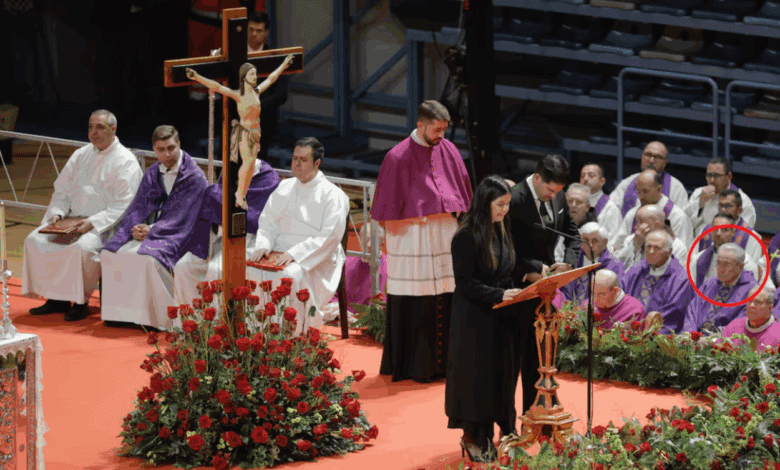
An incident at the funeral of the Adamuz tragedy victims has once again stirred Spanish society. The presence of a former priest previously accused of sexual offenses against minors shocked many attendees. For the victims and their families, this moment brought a new wave of pain and outrage, while for the wider public, it became a reminder of unresolved issues surrounding such cases.
At the center of attention is Ángel Escapa, now 82. In the past, he held senior positions in the Augustinian order, was the director of a renowned educational institution in Alicante, and founded a sports team there. His name became public after several former students accused him of sexual harassment that took place within the school. Despite the order admitting guilt and providing compensation, criminal prosecution did not follow due to the statute of limitations expiring.
Public reaction
Escapa’s appearance at the funeral in Huelva sparked an intense response among those present. Many were shocked that someone with such a background was among those attending a ceremony dedicated to the memory of the victims. The reaction was especially strong from those who had personally suffered from his actions. One former student, himself a victim, spoke openly about his experience, emphasizing that the trust placed in the priest had been cruelly betrayed.
The city authorities in Alicante had previously taken action by removing Escapa’s name from one of the city streets. However, his participation in religious events has not been entirely banned. Although he is prohibited from working with minors and conducting pastoral activities, he is still allowed to attend masses and take part in church ceremonies.
The church’s position
The Order of Augustinians, to which Escapa belongs, explained that he did not lead the ceremony but was present among other clergy members. Nevertheless, for many people, this was not a sufficient justification. The question of how appropriate it is for such individuals to participate in public and religious events has once again become a focal point of public debate.
Victims note that even years after the crimes were exposed, their pain has not subsided. Memories of what they endured return with renewed force each time the main figure in the case is mentioned. For them, Escapa’s appearance at the funeral was not only unexpected, but also a symbol that society still has not developed clear mechanisms for responding to such situations.
Consequences and debate
The scandal surrounding the funeral in Huelva has once again raised the issue of what is permissible for individuals involved in crimes against minors. Public discussion continues: some demand a complete ban on such people from any public events, while others call for a more balanced approach, taking into account legal nuances and the right to repentance.
Such cases are not uncommon in Spain. In recent years, several high-profile incidents involving violence in religious institutions have sparked public protests and prompted the church to revise its policies. Some regions have introduced additional oversight of clergy activities, but there are still no unified standards nationwide.
Reflecting on recent events, it’s worth noting that in 2025, a similar incident occurred in Catalonia, where a former priest accused of harassment was seen at a school celebration. At that time, public pressure forced church authorities to take stricter action. Discussions also continue in other European countries on how to protect victims’ rights and prevent such situations from reoccurring. Spanish society is closely following these developments, demanding transparency and justice.