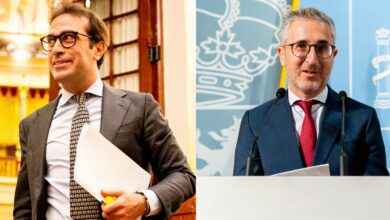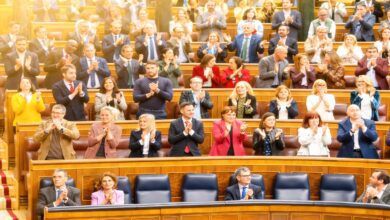
A political battle is heating up in Aragón, one that could shift the balance of power not only in the region but also on a national scale. All eyes are on the upcoming elections, which for the first time are being held separately from the municipal vote, already sparking debate over a possible drop in turnout. Amid rising uncertainty, Pedro Sánchez made a sharp statement, highlighting that support for the Partido Popular (PP) could pave the way for the far-right party Vox to join the regional government. His warning came after an incident at his speech, when a woman in the audience shouted an insult and was then escorted out.
Sánchez did not let the insult go unanswered, noting that such displays of aggression are a sign that opponents lack real arguments. He also reminded everyone that Aragón does not need hostility, arrogance, or radical views, but instead requires positive change. This time, the socialists are focusing on mobilizing moderate and undecided voters, concerned that low turnout could work in favor of the opposition.
Risks for the socialists
According to the latest polls, Partido Popular maintains its lead but falls short of an absolute majority. Vox, meanwhile, is strengthening its position, creating a real threat of a right-wing and far-right coalition. Sánchez stated directly: a vote for PP is essentially a vote for Vox’s presence in the Aragón government. This prospect worries PSOE supporters, who fear a repeat of scenarios already seen in other regions of the country.
The socialist candidate Pilar Alegría also appealed to undecided voters, stressing that only support for PSOE can stop the advance of the far right. She recalled the 2019 events, when the socialists already defeated the current PP candidate Jorge Azcón, and expressed confidence that they could repeat that success. Alegría urged people not to fall for the illusion that a vote for the right would curb Vox’s influence — in her words, it would only open the doors of power to them.
Emotions and music
The rally in Teruel featured not only political statements but also symbolic moments. Sánchez and Alegría took the stage to Bruce Springsteen’s song Streets of Minneapolis, written as a protest against US immigration agency actions and in memory of victims of police violence. This musical choice sent a clear message: the fight for justice and against discrimination remains a key value for the socialists.
During his address, Sánchez once again focused on social policy, promising to continue raising pensions despite resistance from the opposition. He recalled that it was PSOE that had ensured an increase in pension payments in recent years, while previous Partido Popular governments had frozen indexation. Sánchez emphasized that his team is determined to fulfill its commitments regardless of the position of other parties.
Political contradictions
In their speeches, PSOE leaders criticized PP and Vox for inconsistency and double standards. Sánchez noted that representatives of right-wing parties often change their rhetoric depending on the political climate, and that their actions at the European level do not always match their statements at home. In particular, he pointed out contradictions regarding foreign trade and support for agriculture, as well as PP’s willingness to back increased military spending at the request of the USA, despite their own social obligations.
According to the Socialists, all this demonstrates that only their party is capable of ensuring stability and protecting the interests of the majority of citizens. Meanwhile, the opposition accuses the government of populism and inefficiency, which further fuels tensions ahead of the elections.
Context and consequences
The situation in Aragon reflects a broader trend observed in Spanish politics in recent years. The rise in popularity of far-right parties and the formation of coalitions with their participation have already led to significant changes in several autonomous communities. In some regions, such alliances were accompanied by scandals, resignations, and mass protests. Meanwhile, attempts by socialists to mobilize their electorate by appealing to social guarantees and the fight against radicalism have not always produced the expected results.
In recent years, Spain has become a stage for intense political debates, with issues of identity, migration, and social justice taking center stage. In 2025, similar conflicts erupted in Murcia and Castilla y León, where coalitions involving far-right parties sparked a wave of criticism from human rights organizations. Catalonia and Andalusia also saw instances when pre-election promises to curb radicals were not fulfilled, leading to disappointment among part of the electorate. These events illustrate just how unpredictable the outcome can be even in the most seemingly straightforward political scenarios.