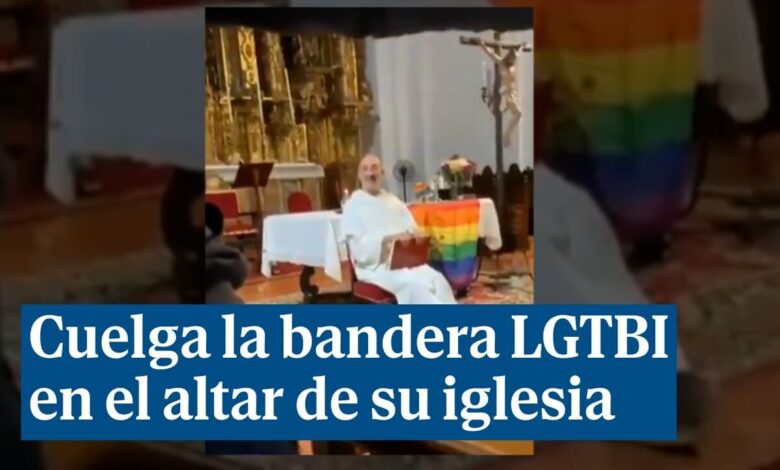
Last weekend, an incident occurred in one of Sevilla’s churches that quickly became the talk of the city. During a monthly mass organized for members of the LGBT community, a rainbow symbol appeared on the altar. Intended as a gesture of openness and support, this act sparked an unexpected reaction among some of those present.
The service was led by Father Javier, who has repeatedly gathered people of diverse views and orientations within the church walls. Everything went peacefully until, after the Gospel reading, one young man began loudly voicing his discontent. He was outraged by the presence of the flag on the altar, believing it contradicted tradition. It later emerged that this individual is connected to an ultraconservative organization known for defending old customs.
Interestingly, just days before the incident, the same young man had requested permission to hold a special service in the church to commemorate the Falangist supporters killed during the civil war. However, the Dominican community responsible for the church denied his request, deciding that such an event was inconsistent with the spirit of openness and hospitality they strive to foster.
The community’s response was swift. Many residents are well acquainted with the parish’s activities and note that it regularly hosts events aimed at bringing together people with different perspectives. For locals, such initiatives are nothing new, but rather an example of how religion can foster dialogue and mutual understanding. However, the incident served as another reminder that even in the 21st century, issues of identity and tradition can spark heated debates.