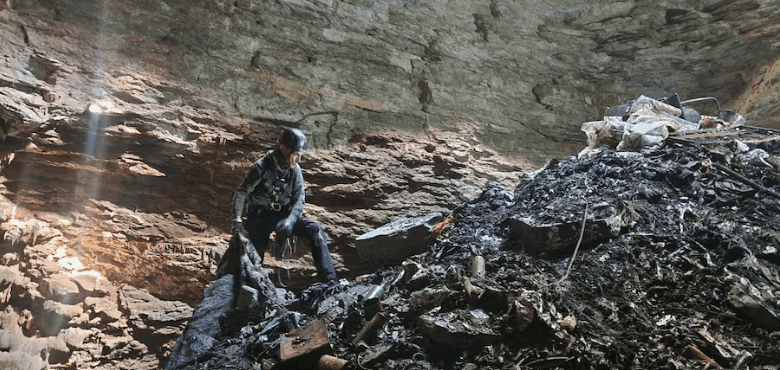
In October 2025, workers clearing debris in the small Leizeta cave in Larraul (Gipuzkoa) made a dangerous discovery. Among dozens of bags of waste that had accumulated for years in this karst sinkhole, they found an ordnance from the Civil War era. The explosive was fully armed and the detonator was still in place, making the situation extremely risky.
The cleanup operation had begun several days earlier, when rope access specialists and speleologists descended into the nine-meter-deep cave. Their task was to manually remove tons of rubbish: from animal bones and construction debris to old batteries and metal objects. In just 22 days of work, nearly a hundred bags of rubbish weighing around ten tons were removed from Leizeta.
When the suspicious item was discovered among the trash, work was immediately halted. Bomb disposal experts arrived to carefully extract the ordnance and conduct a controlled detonation at an open site near the cave. According to specialists, it was an aerial bomb about 70 centimeters long, presumably dropped during the 1936 battles. Nearby, old trenches and military fortifications still remain, serving as reminders of events from almost a century ago.
Environmental threat and the fight against pollution
Leizeta has long been considered one of the most polluted caves in the region. It was included in a list of 48 similar sites, many of which are located in especially vulnerable karst areas that affect the state of groundwater. During recent surveys, volunteers recorded nearly 370 cubic meters of waste in these places, some of which could have seeped into aquifers and posed a threat to the environment.
The Larraul municipality was the first to seek financial support from provincial authorities to organize a large-scale cleanup. A total of 47,000 euros was allocated for this purpose. The work was carried out manually, without the use of heavy machinery, to avoid damaging the cave’s fragile structure and worsening the ecological situation.
Engaging local residents and lessons for the future
The cleanup involved not only professionals, but also volunteers and schoolchildren from Larraul. Excursions to the site were organized for the children to clearly demonstrate the consequences of irresponsible environmental behavior. Local authorities hope this experience will serve as an example for other municipalities facing illegal dumping problems in natural areas.
The clean-up operation in Leiseta highlighted the importance of joining forces to protect the environment. Authorities are encouraging other cities to apply for subsidies and launch their own projects to restore natural areas. Only by acting together can we return the unique landscapes of Gipuzkoa to their original state and ensure their safety for future generations.