The winter of 2026 in Galicia became a true ordeal for everyone involved in seafood harvesting. Unprecedented rainfall and storms virtually paralyzed the work of fishermen and mariscadores, while the mass die-off of mollusks threatened not only family incomes but the future of an entire sector of the region’s economy. The impact of these weather anomalies is already being felt in markets and homes, as fresh catches have become rare and seafood prices have surged.
Weather blow
From early January to late February, eleven storms swept consecutively across northwest Spain. Each brought new waves of rain and wind, pushing water levels in rivers and streams to record highs. According to El Confidencial, the rainfall was so abundant that it could have supplied every resident of the region with water for a century. As a result, fresh water flooded into the river mouths and rias of Galicia, sharply reducing salinity and dealing a fatal blow to the mollusks.
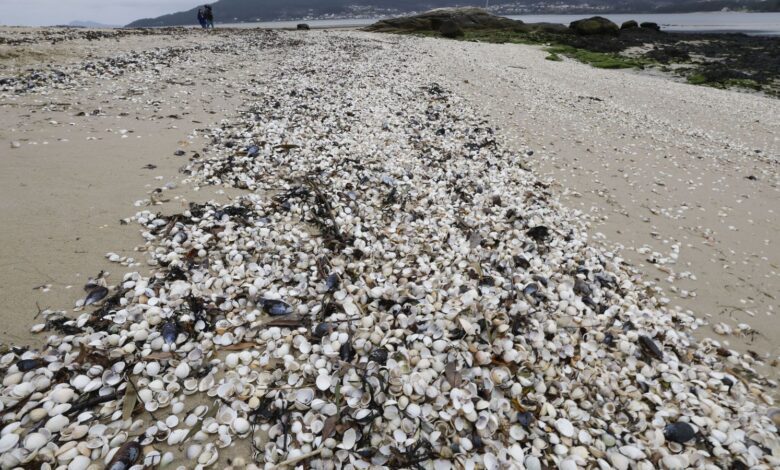
In these conditions, seafood harvesting became virtually impossible. Over two months, fishermen managed to go to sea just eight days. The rest of the time, the fleet stayed in port, while mountains of dead shellfish piled up on beaches and at river mouths. Species such as almeja babosa, berberecho, and other bivalves suffered the most, unable to withstand the abrupt change in conditions.
Economic crisis
Losses to the industry are already estimated in the tens of millions of euros. According to local associations, over the past five years losses have reached €59 million. In some areas, for example in Carril (Pontevedra), the smell of decaying shellfish has become a familiar occurrence. Industry representatives call the situation a catastrophe and are demanding urgent measures from the authorities to protect the remaining resources and support families who have lost their incomes.
The Galician authorities acknowledge the gravity of the situation and are discussing possible recovery steps with fishermen. There is particular concern about the fate of berberecho, which until recently was the backbone of the local industry but has now nearly disappeared. In recent years, its catch volumes have dropped by 87%, and other types of shellfish are also under threat.
A fleet without work
Extreme weather has not only wiped out the catch, but also forced thousands of fishermen to leave their boats in port. According to official data, around 4,700 vessels did not go out to sea for most of the winter. This has led to the closure of fish auctions and a sharp drop in the supply of fresh products. In some ports, such as in Bueu (Pontevedra), sales are down by 16%, and fishermen are having to take out loans to cover ongoing expenses.
The situation worsened due to protests against new fisheries control rules introduced by the European Union at the beginning of the year. After mass demonstrations, some restrictions were eased, but this did not save the industry from losses. Similar issues with weather and risk management have already been discussed in other regions of Spain, for example, during the tragic flood in Valencia, when the actions of the authorities raised many questions.
Consequences and prospects
The mass die-off of shellfish in Galicia is not the first time that extreme weather events have led to serious economic and environmental consequences. In autumn 2023, a drop in salinity levels had already been recorded, but this winter proved even more devastating. According to El Confidencial, January was the darkest and wettest in decades, and the recovery of shellfish populations could take years.
In recent years, Spain has increasingly faced weather anomalies affecting traditional industries. In 2024, similar problems were observed in Andalusia, where drought caused a sharp decline in olive and citrus harvests. In Catalonia and Valencia, floods disrupted the supply of vegetables and fruits. Experts note that climate change requires new approaches to managing natural resources and supporting affected sectors.