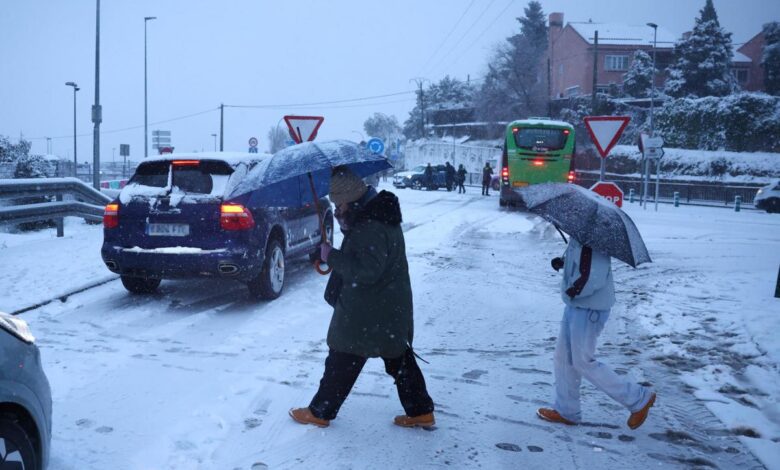
A powerful snowstorm triggered by Cyclone Kristin has become an unexpected ordeal for residents of Madrid and its suburbs. The sudden shift in weather conditions caused transport chaos, school closures, and widespread disruptions to public transit. For many Spaniards, this is more than just a weather anomaly—it’s a genuine threat to daily life: roads are blocked, while reports of stranded vehicles and rail delays have come in since early morning.
Unlike typical winter precipitation, this snowfall has covered not only the mountains but also lowland areas where such weather is extremely rare. From early morning, residents of cities like Alcobendas, Las Rozas, San Sebastián de los Reyes, and Torrelodones watched as the streets were blanketed in white. Even in the capital, the snow fell so heavily that emergency services strongly advised against travel unless absolutely necessary.
Roads and traffic jams
The situation on the region’s major highways caused particular concern. On the A-6 road segment between Guadarrama and Aravaca, traffic ground to a halt: dozens of cars became trapped in snowdrifts while crews struggled to clear the route. In the Torrelodones and Galapagar area, long lines of vehicles formed, leaving drivers cut off from the city.
The situation is no better on other routes: on the A-1 highway near Somosierra and on the M-607 near Colmenar Viejo, the use of snow chains has been made mandatory. Traffic is also restricted on the AP-6 toll road between Guadarrama and Gudillos. Authorities have deployed around a hundred specialists and about thirty snowplows in an effort to improve road conditions, but the snowfall continues and forecasts remain grim.
Public transportation
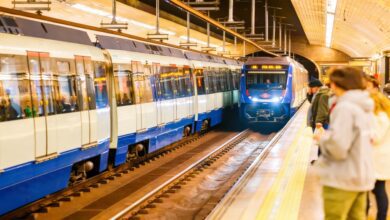
Railway services have also been affected. In the morning, there were major delays on commuter lines C8 and C10, and the section between Cercedilla and Segovia was completely shut down due to snowdrifts. Alternative bus routes were organized for passengers, but many still failed to reach work or school on time.
Residents are sharing photos and videos on social media showing trains halted on snow-covered tracks and empty platforms. Authorities warn the situation could worsen if the snowfall does not ease in the coming hours. Conditions are particularly challenging in the northern and western districts of the region, where snow depths have reached several centimeters, even at relatively low altitudes.
Schools and safety
In response to extreme weather, municipalities in northern Madrid have decided to cancel school classes and suspend the operation of municipal institutions. School administrators have been advised to independently assess the accessibility of buildings, giving priority to the safety of students and staff. Those unable to reach school are encouraged to stay at home, while temporary supervision is organized in school buildings for children who have already arrived.
Since eight in the morning, all mountain passes require the use of winter tires or chains. Authorities stress that ignoring these measures can lead to accidents and new traffic jams. Meanwhile, snow removal machines continue to operate in cities and towns, but the aftermath of the cyclone remains difficult to manage.
Situation in other regions
Madrid was not the only region affected by Cyclone Kristin. Snow has fallen in most northern areas of Spain, including Galicia, Navarra, and northern Aragón. In some places, the snow cover exceeded five centimeters, and levels continue to rise. In Almería, Andalucía, a red alert has been issued due to hurricane-force winds, which may reach up to 130 km/h.
Meteorologists warn that more precipitation is expected in the coming hours, with wind gusts in mountainous areas potentially reaching up to 80 km/h. Social media users are discussing not only the difficulties on the roads, but also the rare landscapes for these latitudes that have already inspired hundreds of photos and videos. Nevertheless, for most residents of the capital and surrounding areas, the main concern remains: when will this snow chaos end, and will it be possible to return to their usual rhythm of life.