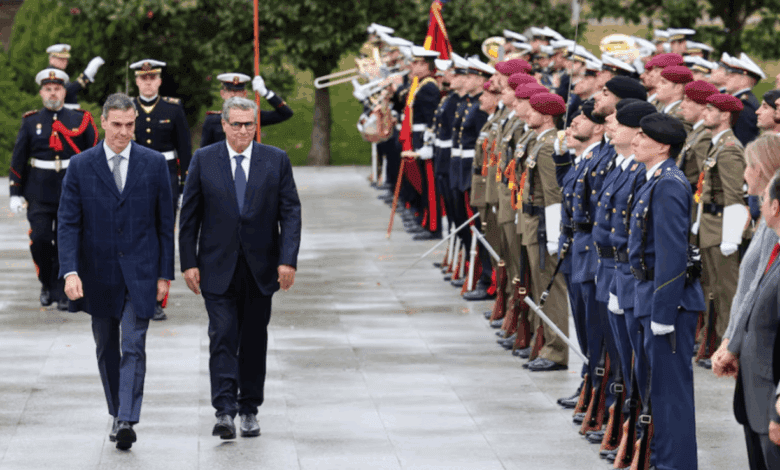
Spain has officially welcomed the UN Security Council’s decision to support, for the first time, the Moroccan plan for granting autonomy to Western Sahara. This development was recorded in a joint statement following the twelfth high-level meeting between representatives of Spain and Morocco, held in Madrid. During the talks, Prime Minister Pedro Sánchez and his Moroccan counterpart Aziz Akhannouch reaffirmed that they regard autonomy under Moroccan sovereignty as the most realistic option for resolving the longstanding dispute over the former Spanish colony.
In the document agreed upon by both governments, Madrid reiterated its position first announced in 2022. At that time, Spanish authorities called the Moroccan initiative the most serious and viable foundation for seeking a compromise. Now, Spain has officially endorsed the UN resolution, which calls for negotiations based on Morocco’s proposed autonomy plan. The goal is to find a fair and lasting solution acceptable to all parties to the conflict.
Divisions within the government
However, not everyone in the Spanish cabinet agrees with this approach. Members of the Sumar party, who advocate for neutrality on the Sahara issue, refused to participate in the talks. Deputy Prime Minister Yolanda Díaz publicly stated that Spain should not concede even a centimeter of Saharan territory and posted a video on social media reading a poem by a Sahrawi poet, ending it with a slogan calling for Sahara’s freedom.
Despite the brevity of the meeting—which lasted less than three hours—the two sides adopted a lengthy joint communiqué consisting of 119 points and signed 14 non-binding agreements. The text makes no direct mention of Ceuta and Melilla, but notes progress in opening trade customs posts between Morocco and these Spanish enclaves in North Africa. Both countries expressed satisfaction that provisions from their bilateral roadmap are being implemented, including the normalization of the movement of people and goods and tighter control over land and sea borders. The only land border between the two nations is, in fact, Ceuta and Melilla.
Economic and social aspects
At the same time, business representatives from Ceuta and Melilla do not share the authorities’ optimism. According to them, despite the formal opening of customs in February, restrictions imposed by Morocco make their operations virtually impossible. This has led to frustration among entrepreneurs who had hoped for a revival of trade and economic cooperation.
The joint statement also emphasized that relations between Spain and Morocco have reached their highest level in history. Special attention was given to cooperation in combating illegal migration. Madrid and Rabat described their collaboration in this area as exemplary and pledged to jointly counter racism, xenophobia, and discrimination, as well as to fight incitement to hatred.
The Moroccan diaspora in Spain
The Spanish side specifically highlighted the contribution of the Moroccan community, which is the largest among foreign nationals in the country. More than 350,000 Moroccans officially work and pay into the social security system. Authorities see this as an example of how close cooperation between the two countries fosters overall prosperity and development.
Notably, Pedro Sánchez has served as Prime Minister of Spain since 2018 and has repeatedly stressed the importance of a strategic partnership with Morocco. His counterpart, Aziz Akhannouch, has headed the Moroccan government since 2021 and is considered one of the country’s most influential politicians. Both leaders are actively promoting closer ties between the two nations, despite ongoing differences on several issues, including the status of the Sahara and economic relations between the countries.