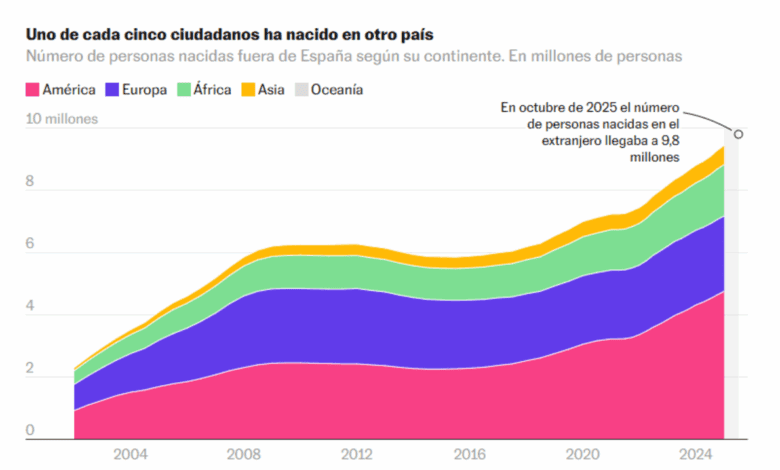
Spain launches a sweeping reform set to affect hundreds of thousands of residents. Authorities have announced the start of a legalization process for foreigners living in the country without documents. This decision could reshape not only people’s lives but also the very fabric of entire neighborhoods — after all, one in five residents of Spain was born abroad. A new map, published in detail for the first time, reveals how foreigners are distributed street by street, clearly illustrating the demographic changes underway.
In recent years, Spain has become one of the main destinations for migrants from Europe, Latin America, and other regions. This is especially evident in major cities and along the coast, where foreigners make up a significant share of the population. Now, with the government moving to simplify the legalization process, the situation may change even more rapidly. For many, this is a chance to step out of the shadows and start a new life officially.
Geography of change
A detailed map based on municipal data offers a street-by-street look at how foreigners are distributed. Europeans dominate the coastline — particularly in tourist zones and cities popular among retirees and seasonal workers. In major metropolitan areas like Madrid and Barcelona, there is a strong presence of people from Latin America, Africa, and Asia. In some districts of the capital and other large cities, foreigners account for over a third of the population.
These figures not only reflect migration flows, but also illustrate the changing social structure of Spanish cities. In some neighborhoods, new shops, schools, and cultural centers are emerging, tailored to newcomers. In others, competition for jobs and housing is growing. All this affects daily life and creates new challenges for local authorities.
Legalization and its consequences
The announced legalization process targets those who have been living in Spain for a long time without the opportunity to obtain official documents. Estimates suggest this concerns hundreds of thousands who have so far remained under the radar. Now, they have the chance to gain legal status, which will grant access to the job market, medical care, and education for their children.
However, experts warn that mass legalization could place additional strain on social services and infrastructure. Authorities are already discussing measures to help new citizens adapt and integrate into society. In some regions, special support programs are being prepared to prevent conflicts and ensure equal opportunities for all residents.
New Faces of Spain
The changes are especially noticeable in everyday life. New languages, traditions, and celebrations are emerging in urban neighborhoods. Foreign speech is increasingly common in markets and cafés. For many Spaniards, this has become a familiar part of city life, but not everyone views these changes the same way. In some areas, tension is rising due to competition for resources and jobs.
Nevertheless, experts point out that the influx of foreigners also brings new opportunities. Many newcomers launch businesses, create jobs, and contribute to the country’s economy. Authorities hope legalization will help reduce informal employment and increase tax revenues.
The future on the map
The publication of a detailed map of foreigners has become a significant event for Spanish society. It not only shows how the country is changing, but also helps identify the challenges that lie ahead. In the coming months, the spotlight will be on how the legalization process unfolds and how life in cities and along the coast will change.
For many Spaniards, this is a reason to reflect on the country’s future and how new neighbors might affect the familiar way of life. One thing is clear: Spain is no longer what it was ten years ago, and the pace of change is only accelerating.