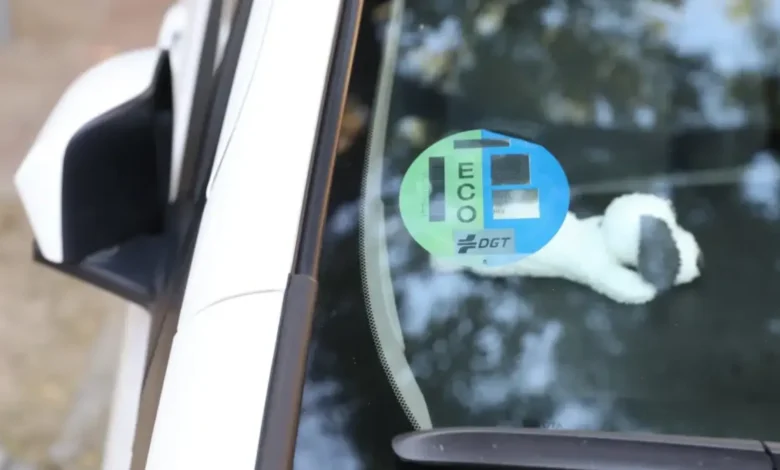
In recent months, rumors have been circulating in Spain about potential changes to the environmental sticker system issued by the Dirección General de Tráfico (DGT). Many drivers are concerned: will they have to replace their familiar stickers as early as 2026? However, for now, there are no official decisions regarding an immediate reform, and all discussions are focused on possible scenarios for the future.
Automotive vloggers and experts note that a parliamentary working group is indeed being formed to analyze the current classification system. Its primary task is to assess how well the existing criteria match today’s environmental requirements and European standards. Still, at this stage, the process is limited to developing proposals rather than taking concrete actions.
Reasons for the review
Among the reasons for a possible adjustment to the system, experts highlight mounting pressure from environmental groups and certain politicians. They are calling for stricter rules for hybrid and electric vehicles, especially those currently benefiting from ‘zero emissions’ and ‘hybrid’ stickers. Reform advocates argue the current system does not always accurately reflect actual emissions levels and fails to properly incentivize manufacturers to reduce pollution.
In particular, it is proposed to consider not only the engine type but also actual CO2 emissions, which could lead to a revision of the sticker assignment criteria. Car manufacturers, for their part, oppose such changes, fearing additional costs and a more complicated certification process for new models.
Myths and Reality
Rumors have already begun circulating in society that from January 1, 2026, all drivers will be required to replace their eco stickers. However, experts deny these claims: no mandatory changes are planned in the near future. In 2026, the system will remain unchanged, and any possible innovations will be discussed and introduced gradually, taking into account the opinions of all interested parties.
Nevertheless, the idea of stricter vehicle classification based on emission levels is being discussed—an approach already implemented in several EU countries. In some regions of Spain, such as Catalonia, additional restrictions for high-CO2 vehicles are already in effect, impacting both taxation and access to certain city zones.
Possible Changes
Experts do not rule out that by 2027, when the new Euro 7 environmental standard comes into force, the sticker system could be updated. This may affect both the assignment criteria and the appearance of the stickers themselves. Any changes are expected to spark heated debate among drivers, manufacturers, and environmentalists.
The proposed changes could affect not only new vehicles, but also those already in use. If the new rules are adopted, some car owners may need to reconsider their habits or even switch vehicles to meet the requirements.
Public Reaction
The debate over the future of eco-stickers has already sparked controversy in Spanish society. Some believe stricter rules will help improve the urban environment and reduce air pollution. Others fear the new requirements will bring extra costs for ordinary people and complicate life for owners of older cars.
Meanwhile, representatives of the automotive industry warn that sudden changes could negatively impact the market and lead to a drop in sales. Most experts agree that any reforms should be introduced gradually, taking into account the interests of all parties.
If you weren’t aware, the DGT is Spain’s government agency responsible for traffic management, road safety, and issuing driver’s licenses. The eco-label system was introduced to encourage the use of cleaner vehicles and reduce harmful emissions. In recent years, DGT has actively implemented digital services and participated in the development of new standards for the transport sector.