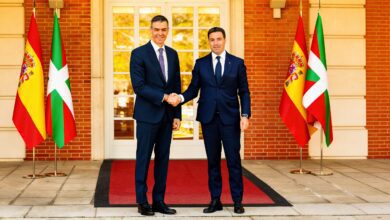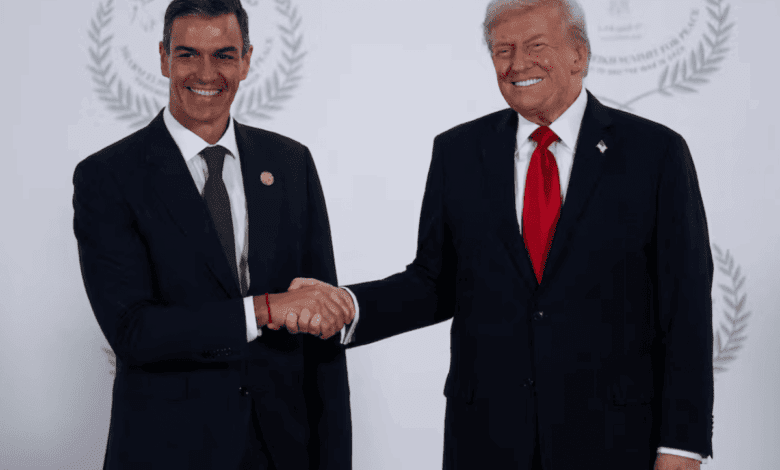
The Spanish government faces a difficult decision: whether to accept or decline Donald Trump’s invitation to join the Peace Council, which is set to oversee the reconstruction of Gaza after the ceasefire between Israel and Hamas. The issue goes beyond the humanitarian mission itself, involving the political consequences of such a move. Madrid is consulting with European and global partners, as other countries—including Russia and Belarus—along with the European Commission, have also received invitations.
Trump, as always, is acting assertively. His frustration over France’s refusal to participate in the Council has led to a threat to impose 200 percent tariffs on French wine and champagne. Emmanuel Macron responded in kind, stating at the Davos Economic Forum that France does not yield to pressure and chooses respect for the law over the rule of force. This exchange quickly became the talk of diplomatic circles.
A new body
The Peace Council is envisioned as an international body that will oversee the recovery of devastated Gaza. However, under Trump’s plan, its jurisdiction could extend far beyond this Middle Eastern region. The US President intends to lead the Council personally and grant himself the authority to decide who is worthy of being a member. To secure a permanent seat, countries are being asked to contribute at least one billion dollars.
This approach has raised concerns among many nations. Behind the scenes, there are discussions that Trump may try to use the Council as an alternative to the UN, which he has frequently criticized and sought to weaken. UN Secretary-General António Guterres reminded that it is the General Assembly that brings the global community together and serves as a platform for dialogue, development, and the protection of human rights. His remarks sounded like a warning against attempts to create parallel institutions.
Diplomatic Tensions
Trump’s invitation list includes about fifty countries, not only US allies but also states with controversial reputations. Russia has yet to respond, while Belarus, on the contrary, enthusiastically supported the idea—a move that European diplomats saw as a challenge. Israel, for its part, is categorically opposed to the participation of Islamic countries such as Turkey and Qatar in the Council.
The plan was for the Peace Council to be officially established in Davos, where Trump was attending the economic forum. However, disagreements and skepticism from several countries, including France, have postponed the signing. Tensions run high behind the scenes at Davos: some see the initiative as a chance for a new approach to conflict resolution, others—as a threat to the international balance.
Actual Powers
Despite bold statements, the Peace Council will not receive executive powers. Its role is to oversee the implementation of the second phase of the Gaza peace plan, which involves the withdrawal of Israeli troops and the disarmament of HAMAS. Real authority will rest with a special committee that includes US Secretary of State Marco Rubio, Trump’s son-in-law Jared Kushner, White House special envoy Steve Witkoff, and former UK Prime Minister Tony Blair.
All of this turns the Council into a tool for political influence rather than an independent international body. Many countries fear that under the guise of a humanitarian mission, the US will try to impose its own rules and push the UN out of key positions in global affairs.
Spain’s Dilemma
For Spain, the issue of joining the Peace Council is not only diplomatic but also concerns its image. On one hand, Madrid does not want to be sidelined in Gaza’s reconstruction and lose influence in the region. On the other, participating in a project that stirs so much controversy and suspicion could damage relations with European partners and erode trust in international institutions.
So far, Spanish authorities are in no rush to make a decision. Consultations continue both within the country and abroad, while diplomatic circles debate whether it’s worth giving in to the American president, who openly pursues his ambitions and is willing to use economic pressure to achieve his aims. Spain now finds itself at the center of a new high-stakes game, where much more is at stake than just the reconstruction of a devastated city.