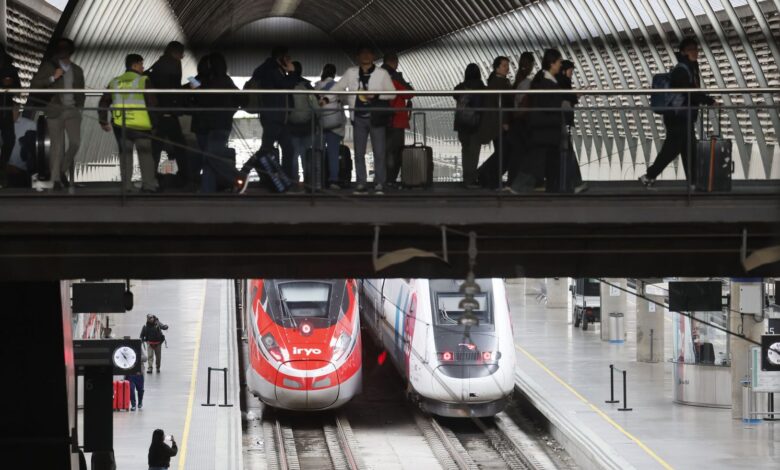
Railway safety in Spain is once again under scrutiny following a recent incident in Adamuz. Engineers and members of the scientific community believe the state of infrastructure has reached a critical point. According to them, a temporary suspension of AVE train services is necessary to allow for a thorough inspection and renewal of tracks to prevent further accidents and ensure passenger safety.
Risks and alarming signals
According to El confidencial, at a session of the Real Academia de Ciencias de España, experts stressed that without adequate funding, maintaining the railway network becomes impossible. Academician Enrique Castillo from Universidad de Cantabria noted that postponing solutions only heightens the risks for all rail users. He pointed out that recent speed restrictions on certain routes indicate that infrastructure upgrades can no longer be delayed.
In recent years, Spain has seen an increase in rail track failures. Jaime Domínguez Abascal, head of the Real Academia de Ingeniería, reported that in 2024 alone, there have been 24 instances of rail fractures—double the amount recorded ten years ago. He suggested introducing protocols in the rail industry similar to those used in aviation, where each incident prompts a review of safety standards and procedures.
Funding and priorities
Experts believe that cutting costs on railway maintenance is dangerous. In their view, funding should primarily support track upkeep and safety systems, not the construction of new stations that do not affect operational safety. Castillo emphasized that any investments must serve the main goal—protecting the lives and health of passengers.
During the discussion, examples of major accidents in other European countries were cited, including the 1998 disaster in Germany and the 2013 tragedy in Angrois. All participants agreed that only a systematic approach to updating standards and ongoing monitoring of infrastructure conditions can reduce risks and prevent further tragedies.
The need for change
The Real Academia de Ciencias de España reminded that their role involves not only scientific research but also advising the government on transport safety and development. According to experts, the authorities now need to heed recommendations and urgently take measures to modernize the railway network.
As El confidencial reports, the debate about railway safety has not subsided for several years. After every major incident in the country, the effectiveness of implementing commission recommendations is questioned. According to the latest data, only a portion of the proposed measures has been enacted, while most are still awaiting implementation.
In recent years, Spain has faced a rise in railway accidents, linked to increased traffic and aging infrastructure. In 2024, according to El confidencial, only 4 out of 10 safety recommendations issued by the relevant commission over the past six years were implemented. This alarms experts and highlights the urgent need for change.
Looking back at similar incidents, it’s worth remembering that the 2013 tragedy in Angrois prompted a sweeping review of the entire railway safety system. Serious deficiencies in track monitoring and maintenance were uncovered at the time. Since then, Spain has repeatedly discussed the need to update standards and boost funding for infrastructure maintenance. However, as the current situation shows, many issues remain unresolved and passenger risks continue to grow.