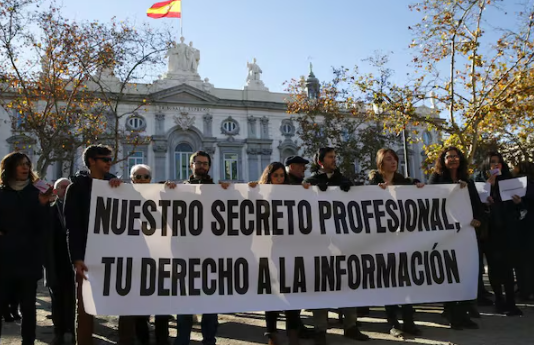
In the coming days, Spain will witness a heated debate over a new bill intended to establish the rules for protecting journalistic confidentiality. The government-drafted document has already sparked a wave of criticism from members of the judiciary. Members of the General Council of the Judiciary (Consejo General del Poder Judicial) believe that the proposed regulations do not provide sufficient protection for media professionals and their sources.
Experts have paid particular attention to provisions regarding restrictions on the right to withhold information. In their view, the wording is too vague and could lead to uncertainty in law enforcement. European legislation requires that national laws provide no less, and often higher, levels of protection than those set by EU-wide standards. However, specialists point out that the Spanish bill falls short of these requirements.
In July, the government approved a bill stipulating that the disclosure of sources would only be permitted by court order and solely in cases where it is necessary to prevent a serious threat to life, health, or national security. For the first time in the country’s history, journalistic confidentiality has received such clear legislative definition. Nevertheless, critics note that the text contains provisions that could be interpreted too broadly, which poses risks for freedom of speech and press independence.
Judges and lawyers emphasize that the law must be as clear as possible and leave no room for ambiguous interpretations. In particular, the provision allowing surveillance of journalists has raised concerns—experts believe it not only fails to strengthen protections but actually weakens them compared to current criminal procedure regulations. As a result, journalists may find themselves in situations where it is difficult to determine when their right to confidentiality can be restricted and when it cannot.
The document is currently under review by several government bodies, including the Council of State and the Office of the Prosecutor General. Their opinions are not binding, but they may influence the final version of the law. Authorities are expected to review the disputed provisions in the near future to eliminate ambiguities and enhance legal certainty for all participants in the media sector.