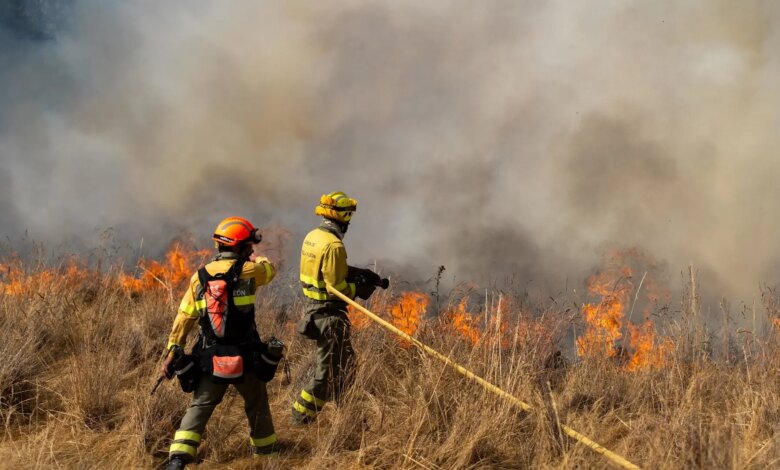
Spain has declared a national pre-emergency regime in response to a sharp increase in wildfires affecting several regions of the country. The Ministry of the Interior has decided to raise the level of operational readiness to ensure rapid mobilization of resources and enhance coordination among various agencies.
In the early hours of Tuesday, around 2 a.m., the leadership of the national civil protection service announced the transition to the pre-emergency phase under the State Emergency Plan (PLEGEM). This decision was made due to the urgent need to respond to multiple outbreaks of fire, requiring additional forces and resources at the national level.
Following the upgrade in readiness, the National Emergency Monitoring and Coordination Center (CENEM) intensified cooperation with regional emergency services. This approach enables real-time monitoring of the situation and timely adjustment of actions to prevent further spread of the fire.
A meeting of the State Coordination Committee on Forest Fires is scheduled to take place in the coming hours. The discussion will involve representatives from the Ministry for Ecological Transition, the Spanish Meteorological Agency (AEMET), as well as heads of the defense department and other relevant bodies. The main objective of the meeting is to assess the current situation and coordinate further steps to combat the fires.
Despite the declaration of a pre-emergency situation, management and control over fire containment efforts remain the responsibility of the autonomous communities. Federal authorities do not intervene in local operations, but they provide necessary support and coordinate the allocation of resources among the regions.
The State Emergency Plan (PLEGEM) serves as the main tool for organizing the national civil protection system. It establishes the framework for cooperation between various levels of government, as well as mechanisms for mobilizing and distributing resources during crises.
In recent days, weather conditions in Spain have contributed to the rapid spread of the fires. High temperatures, drought, and strong winds are hampering the work of firefighters and rescue services. Authorities urge residents to exercise caution, follow official updates, and stay away from dangerous areas.
The situation remains tense, and further developments will largely depend on weather conditions and the effectiveness of coordinated efforts by all involved agencies. Authorities emphasize that they are prepared to respond promptly to any changes and, if necessary, strengthen measures to protect the population and natural areas.