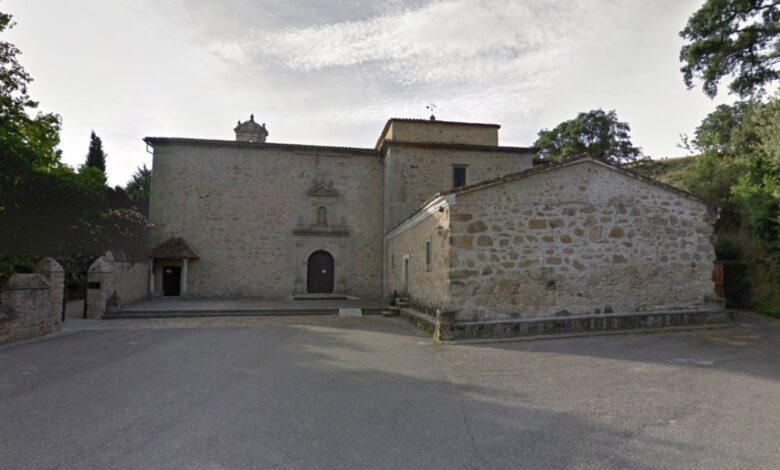
Spain rightfully takes pride in its monumental heritage. Majestic cathedrals, awe-inspiring palaces, and enormous monastic complexes like El Escorial and Montserrat draw millions of travelers each year. Amidst this architectural grandeur, the story of a place that is its complete opposite almost goes unnoticed. In the province of Cáceres, tucked away in a remote corner of Extremadura, lies the smallest monastery in the world, affectionately called the “conventito”—the little monastery. Its area is just 72 square meters, about the size of a standard city apartment, but its spiritual significance is immeasurably greater.
A spiritual giant in a tiny cell
The history of this remarkable monastery is inextricably linked to its founder, Saint Pedro de Alcántara. This Franciscan monk, born in 1499 and later becoming the patron saint of Extremadura, stood out not only for his spirit but also for his height, reaching 190 centimeters. Educated at the prestigious University of Salamanca, he embraced the ideas of Saint Francis of Assisi and devoted his life to the strictest asceticism and service. His commitment to poverty and humility was absolute and manifested in everything he did. He was a close friend of Saint Teresa of Ávila, who, according to accounts, was deeply moved by his way of life. She described how the giant monk spent years sleeping sitting in his cell, resting his head on a wooden beam embedded in the wall, since his shelter was so small that he could not even stretch out to his full height.
Seventy-two meters of faith
The El Palancar Monastery was founded in 1557. Its story began when a friend of Pedro de Alcántara, Rodrigo de Chaves, gave him a small house in the village of Pedroso de Acim. This modest building became the nucleus of the future monastery. Together with another fellow monk, they arranged the space so that everything served the idea of self-denial. Inside, there were several cells, a kitchen, a refectory, and a chapel. The latter was so cramped that, according to chronicles, two monks could barely fit in it at the same time. The founder’s own cell was the smallest and most austere—a true symbol of his philosophy of life. The rooms of his companions were only slightly more ‘spacious,’ just enough for a simple wooden cot. The furnishings were kept to a bare minimum: a hearth in the kitchen, a few basic utensils. Even the small courtyard, or cloister, was merely a tiny area with four wooden posts in the corners marking the sacred boundary.
A legacy impossible to measure in square meters
Over time, the monastery complex expanded, with new, more spacious buildings added to it. However, the original part—the very ‘little monastery’ measuring just 72 square meters that brought this place worldwide fame—has been preserved in its authentic form. Today, this unique structure is open to visitors, allowing everyone to connect with a story of extraordinary spirit and self-sacrifice. El Palancar stands as a powerful reminder that greatness isn’t always defined by size and grandeur. In a country known for its majestic cathedrals and royal residences, this tiny corner of humility and faith holds a special appeal, proving that true spiritual heritage can fit within just a few dozen square meters.