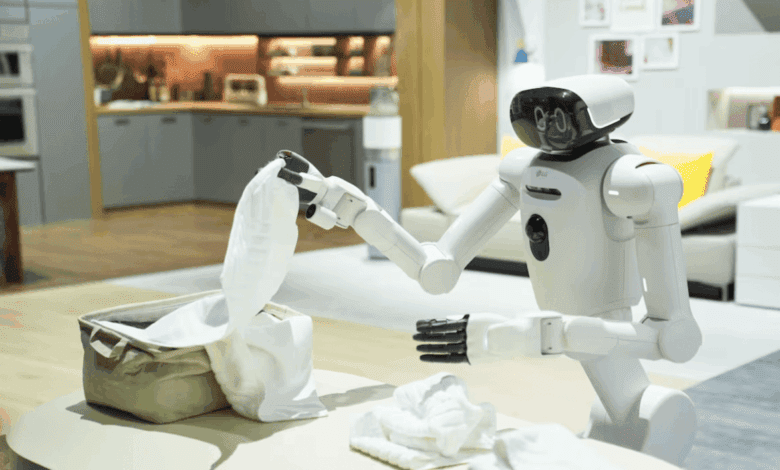
Spain launches an ambitious project as the government allocates more than 175,000 euros to create a laboratory dedicated to studying how people interact with artificial intelligence and robots. The focus will be not only on technical aspects, but also on ethics, social responsibility, and preserving human control over machines. In the 21st century, as AI penetrates every area of life, such initiatives are not just relevant—they are essential.
The laboratory will be located on the Bellaterra campus (Bellaterra) of the Universitat Autònoma de Barcelona (UAB). Here, scientists, engineers, and social science specialists will come together to find answers to questions that until recently seemed like science fiction. Researchers will have access to six mini-robots and one semi-humanoid robot, as well as state-of-the-art equipment for analyzing speech, facial expressions, and movement.
Technology and humanity
The main goal of the laboratory is not simply to build new machines, but to teach them to understand people. The research will go in several directions at once. First, scientists will try to translate the complex mechanisms of human communication into algorithms, allowing robots to behave appropriately in social contexts. Second, they are developing scalable architectures for complex intelligent systems capable of operating in real time and adapting to changing conditions.
Particular attention is given to ethical issues. In an era when AI can make decisions, it is essential that these decisions are transparent, fair, and respect human rights. The laboratory aims to develop systems that enhance human capabilities rather than replace them, keeping control in human hands.
Social aspects
The research focuses on the interaction between humans and artificial intelligence in daily life. This concerns not only industrial robots, but also virtual assistants, 3D avatars, and smart objects. Spanish scientists are confident that the future belongs to technologies that can listen, understand, and support people, not just execute commands.
The laboratory will be equipped to create virtual worlds and simulations, making it possible to model complex interactions between humans and machines. This is especially important for developing solutions in medicine, education, and social support. For instance, one project—EMOROBCARE—is aimed at building a robot to assist children with autism during therapy sessions.
Innovation in detail
The laboratory’s technical infrastructure is impressive. In addition to a computing core capable of running modern language models, the facility will feature workstations for generating 3D graphics, as well as systems for speech recognition and motion analysis. A special highlight is the robot, equipped with laser sensors and an RGBD camera, capable not only of seeing but also of assessing spatial depth, recognizing objects and people, and delicately manipulating items.
Additionally, a system of six mini-robots will be introduced, enabling them to work together as a team to solve collaborative tasks. This approach will make it possible to research both individual and group interactions between humans and machines, a particularly relevant area for future service and educational applications.
Ethics and oversight
Spanish authorities emphasize that the main objective is to maintain a human touch in a world where AI is becoming increasingly autonomous. The laboratory will focus on ensuring that artificial intelligence remains a tool, not a master. It is essential that technology serves society, not the other way around. In this regard, Spain is committed to developing so-called ‘human-centric’ artificial intelligence, prioritizing transparency, fairness, and respect for privacy.
Even the most advanced algorithms, however, will never fully replace human intuition and empathy. Robots can become excellent assistants, but only if their creators remember the most important thing — the human being. This Spanish project is an attempt to find a balance between innovation and traditional values, between progress and responsibility.
The future is already here
The Barcelona laboratory will serve as a platform for collaboration not only among scientists, but also business leaders, technology companies, and other research centers. The outcomes are expected to be in demand across fields as diverse as healthcare, education, and urban infrastructure.
Questions that seemed the stuff of science fiction only recently are now becoming part of everyday reality. Spain is not just observing the rise of artificial intelligence, but is actively setting the rules of the game to maintain human oversight and ensure that technology truly benefits society. It may be here that the solutions shaping the way we live and work in the coming decades will emerge.